

- Amarnath Yatra
- @nagarjuna_travels
Every year, hundreds of thousands of devotees set out on the sacred Amarnath Yatra — and a large number of them begin their journey from India's capital. Yet most of them spend days piecing together conflicting travel information across a dozen websites, confused about which route to take, which train to book, or whether to fly. The result is a journey that starts with stress instead of serenity. This guide removes that confusion entirely. Whether you want to know how to reach Amarnath from Delhi by train, by flight, by bus, or by road — every option is laid out clearly here with distances, travel times, booking tips, and what to expect at each stage. Plan your amarnath from delhi yatra with complete confidence.
Amarnath from Delhi: Understanding the Full Journey
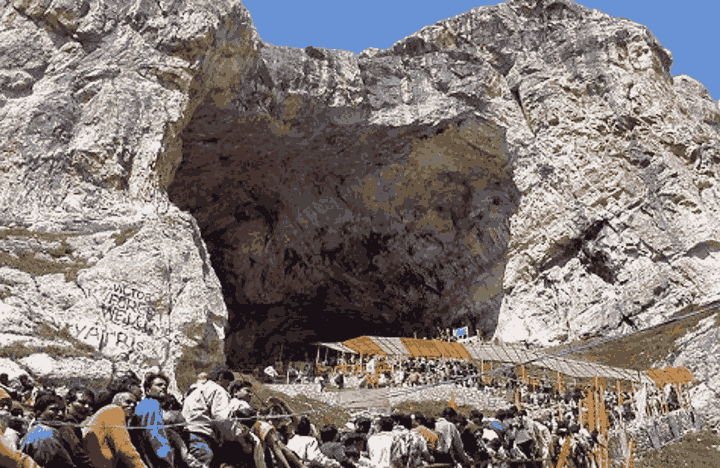
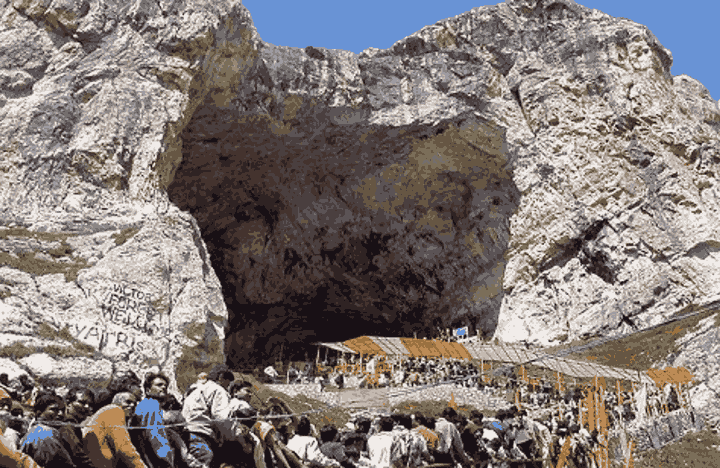
The Holy Cave shrine of Amarnath sits in the Himalayan range of Jammu and Kashmir at an altitude of 3,888 metres above sea level. Delhi is not connected directly to Amarnath — no road, rail, or flight takes you to the cave itself. Every pilgrim must travel in stages: first to Jammu or Srinagar, then to one of the two official base camps, and finally on foot or by helicopter to the cave
The amarnath to delhi distance by road via Jammu is approximately 900 to 950 km. From Delhi, the journey breaks down as follows: Delhi to Jammu is roughly 580 km, Jammu to Pahalgam base camp is around 220 km, and Jammu to Baltal base camp is around 330 km. If you fly into Srinagar instead, the drive to Pahalgam is 96 km and to Baltal is 93 km. The cave trek from Pahalgam covers 36 to 48 km over 3 to 4 days. From Baltal, the trek is 14 to 16 km and is typically completed in a single strenuous day.
How to Reach Amarnath from Delhi by Train
The train is the most popular and economical way to begin the amarnath route from delhi. Jammu Tawi Railway Station is the closest major railhead to both base camps and is extremely well connected to Delhi. Multiple overnight trains run daily from New Delhi and Hazrat Nizamuddin stations.
The Jammu Rajdhani Express (Train No. 12425) departs New Delhi at 20:35 and reaches Jammu Tawi by 05:50 — a journey of approximately 9 hours 15 minutes. The Uttar Sampark Kranti Express (12471) leaves Hazrat Nizamuddin at 20:30 and arrives at 06:00, taking around 9 hours 30 minutes. The Jammu Mail (14033) departs Old Delhi at 21:40 and reaches Jammu Tawi by 07:45. The Shalimar Express (14645) is another reliable option, departing New Delhi at 17:30 and arriving at Jammu by 04:50.
On arriving at Jammu Tawi, take a cab, shared taxi, or JKSRTC bus to your chosen base camp. The drive from Jammu to Pahalgam takes approximately 5 to 6 hours (220 km). The drive from Jammu to Baltal takes approximately 7 to 8 hours (330 km). Government-run buses depart from Jammu Bus Stand, which is close to the railway station. Book your train tickets at least 60 days in advance — berths fill up fast during the yatra season.
How to Reach Amarnath from Delhi by Flight
Flying is the fastest way to begin the amarnath yatra from delhi. The route is Delhi to Srinagar — Sheikh ul-Alam International Airport — which is the closest airport to both base camps. The flight takes approximately 1 hour 30 minutes. Airlines including IndiGo, Air India, SpiceJet, and Vistara operate multiple daily flights on this route. Fares range from Rs 3,000 to Rs 9,000 one way depending on how early you book — prices spike sharply in July and August, so booking 45 to 60 days ahead is strongly recommended.
After landing at Srinagar airport, the drive to the base camps is straightforward. Srinagar to Pahalgam is approximately 96 km and takes 2.5 to 3 hours by road via Anantnag. Srinagar to Baltal is approximately 93 km and takes around 2 to 2.5 hours via the Sonamarg highway. Pre-booked cabs and SASB-operated government buses are both available from Srinagar. Many pilgrims spend a night in Srinagar before heading to the base camps — the city is beautiful and a short stay helps with acclimatisation.
How to Reach Amarnath from Delhi by Bus
The bus is the most budget-friendly way to cover the amarnath from delhi distance by road. JKSRTC and several private operators run overnight buses from Delhi to Jammu throughout the yatra season. Buses depart from ISBT Kashmere Gate — Delhi's main interstate bus terminal — as well as from Majnu Ka Tila and Anand Vihar ISBT. The Delhi to Jammu journey takes approximately 10 to 12 hours (580 km).
JKSRTC government buses are reliable and air-conditioned. Volvo and sleeper buses from private operators offer comfortable overnight travel. Fares typically range from Rs 700 to Rs 1,500 depending on bus type and operator. Tickets can be booked through the JKSRTC website, RedBus, or directly at ISBT Kashmere Gate. On arriving at Jammu Bus Stand, board a connecting government bus or hire a cab to Pahalgam or Baltal to continue your journey.
How to Reach Amarnath from Delhi by Road (Self-Drive or Cab)
For pilgrims who prefer to drive or hire a cab, the amarnath route from delhi by road is a visually stunning journey through the Shivaliks and deep into the western Himalayas. The most direct route follows National Highway 44 from Delhi through Ambala, Ludhiana, and Pathankot to Jammu — a distance of approximately 580 km that takes 9 to 10 hours by car in normal traffic conditions.
From Jammu, the road to Pahalgam follows NH-444 and NH-244 via Udhampur, Ramban, and the Banihal Tunnel — approximately 220 km in 5 to 6 hours. To reach Baltal, continue on NH-44 via Srinagar toward Sonamarg — approximately 330 km from Jammu taking 7 to 8 hours. The total road journey from Delhi to Pahalgam is approximately 800 km, and Delhi to Baltal is approximately 910 km. Plan for an overnight halt at Jammu rather than attempting the full drive in one stretch.
Expert Tips for the Amarnath Yatra from Delhi
Before You Leave Delhi
- Complete SASB registration and obtain your Compulsory Health Certificate well before your travel date.
- Book train tickets, flights, and Jammu or Srinagar accommodation at least 60 days in advance.
- Begin physical conditioning 4 to 6 weeks before the yatra — daily walks of 6 to 8 km on hilly terrain are ideal.
- Carry all essential documents: registration slip, CHC, valid photo ID, and travel insurance.
- Check Kashmir weather forecasts 48 hours before departure — sudden snowfall or rain can delay travel.
On the Trek
- Acclimatise at your base camp for at least one night before starting — altitude sickness is a real risk at 3,888 m.
- Start trekking early each morning, ideally before 6 AM, to cover ground in daylight and cooler air.
- Carry at least 2 litres of water and drink regularly even if you do not feel thirsty.
- Do not rush — pace management is everything on a multi-day high-altitude trek.
- Medical camps with doctors and oxygen cylinders are placed at regular intervals — note their locations.
- Wear warm layers even in summer — temperatures near the cave can drop close to freezing at night.
What to Carry
- Sturdy trekking boots with ankle support — broken in well before the yatra, never new on the day
- Waterproof rain jacket or poncho — weather in Kashmir changes rapidly and without warning
- Thermal inner layers and a fleece or down jacket for cold base camp nights
- Personal medicines, a basic first-aid kit, and altitude sickness tablets (consult your doctor beforehand)
- Dry fruits, energy bars, and light snacks for the trail
- Power bank, headlamp or torch, and a trekking pole or walking stick
- Yatra registration slip and valid government-issued photo ID — checked at multiple points
Best Time to Travel from Delhi for the Amarnath Yatra
The Amarnath Yatra is not an all-year pilgrimage. The Holy Cave is accessible only during the official yatra season — typically from late June or early July through mid-August, closing on the auspicious occasion of Raksha Bandhan. Outside this window, the cave is snowbound and inaccessible.
Late June to early July is the start of the season — the trail is cold and may have residual snow on upper sections, but crowds are moderate and queues manageable. Mid-July is widely considered the ideal window: weather is stable, the landscape is at its most beautiful, and the atmosphere on the trail is deeply spiritual. Shravan Purnima and the weeks around it in August are the most auspicious and the most crowded — darshan queues can stretch to 4 to 6 hours and all accommodation books up months ahead. Post-August, the season closes and weather becomes unpredictable — this period is best avoided.
Conclusion
The journey of amarnath from delhi is one of the most spiritually rewarding undertakings a devotee can make. Whether you travel by train through the night, board an early morning flight to Srinagar, or drive the full highway stretch — whether you trek Pahalgam's gradual four-day route or push through Baltal in a single determined day — every step of this yatra carries the weight of devotion and the promise of Mata's blessings.
Know your route. Register on time. Book early. Prepare your body. And when you finally stand before the sacred ice Shivling in the holy cave, surrounded by the eternal Himalayas, every kilometre of the amarnath from delhi journey will make complete sense.