

- Adi Kailash Blogs
- Devesh Tiwari
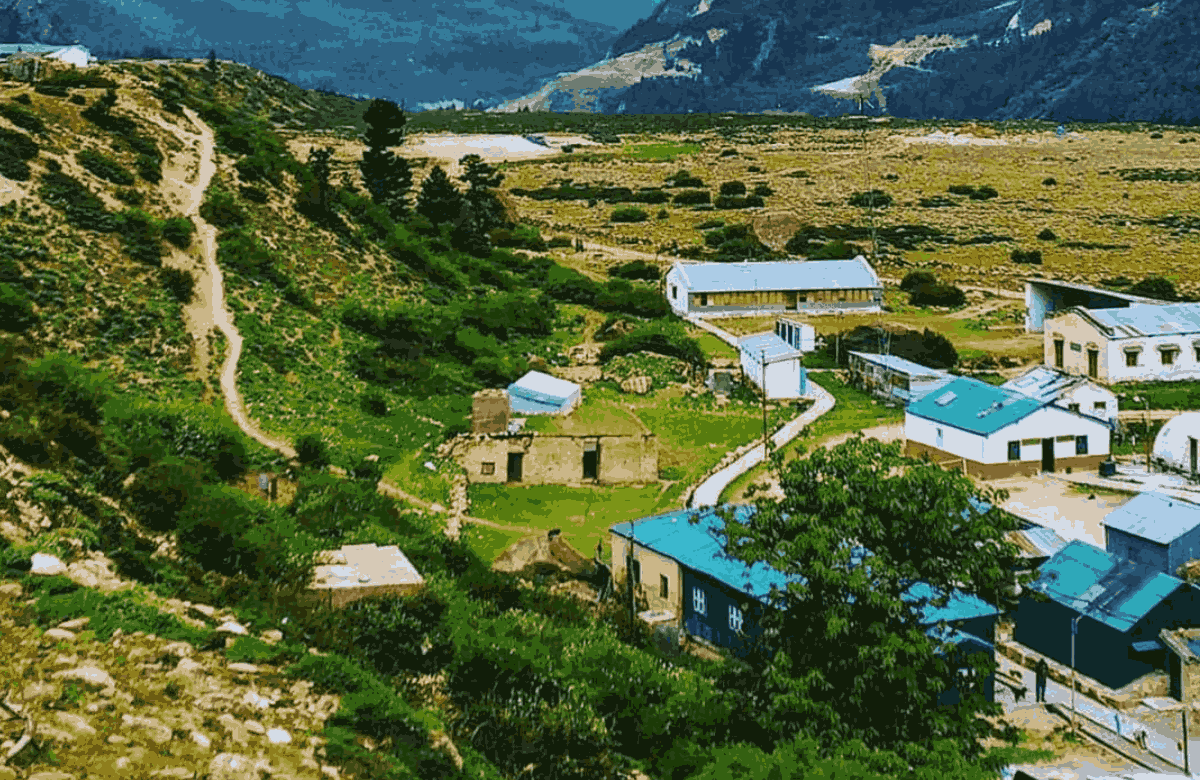
Every pilgrim heading to Adi Kailash and Om Parvat passes through Gunji village. Most of them arrive without knowing its true role in the yatra — they think of it as just another overnight stop on a long road journey. In reality, Gunji is the single most important logistical and strategic point on the entire route. It is where the road forks, where permits are verified, where acclimatisation happens, and where both the Adi Kailash and Om Parvat darshan routes originate. Getting Gunji right is essential to getting the whole yatra right. This guide gives you everything: what Gunji village is, how to reach it, what the altitude means for your body, what to expect at the ITBP checkpoint, where to stay, how to plan your two-day darshan from Gunji, and the latest 2026 developments that are transforming this ancient border village into one of India's most celebrated pilgrimage gateways.
What Is Gunji Village and Why Does It Matter?
Gunji is a small border village in the Dharchula tehsil of Pithoragarh district, Uttarakhand, situated at an elevation of approximately 3,200 metres. It lies near the trijunction point where India, Nepal, and China converge — making it one of the most geopolitically and spiritually significant villages in the country. The 2011 census recorded a population of just 335 residents across 194 households — a tiny settlement by any measure. But during the yatra season from May to September, Gunji transforms into a bustling pilgrimage hub, with groups of yatris, ITBP personnel, KMVN staff, local traders, mule owners, and porters filling the village with an energy that blends the practical with the sacred. Most critically, Gunji is the last sizable Indian settlement before the Indo-Tibetan border and the point where the motorable road forks into the two separate routes that lead to Adi Kailash and OmParvat. Everything on the yatra flows through this village.
Gunji: The Strategic Junction Where the Route Forks
This is the defining geographical fact about Gunji that every pilgrim must understand before arrival. At Gunji, the road divides into two separate branches, and your entire day-planning for the yatra is built around this fork.
| Branch | Direction | Destination | Key Stop | Final Altitude |
| Left | Northeast | Adi Kailash | Kuti Village | ~4,572 m |
| Right | Northwest | Om Parvat | Kalapani | ~4,300–4,700 m |
Most standard itineraries use Gunji as the overnight base for both excursions, visiting Jyolingkong for Adi Kailash darshan on one day and Nabhidhang for Om Parvat darshan on the next — or in reverse order on the return leg. The route to Jyolingkong is typically done first, after an acclimatisation night at Gunji, with Om Parvat visited on the return journey.
How to Reach Gunji from Dharchula
The road journey from Dharchula to Gunji is approximately 70 km and typically takes 5 to 6 hours, depending on road conditions, weather, and delays at ITBP checkpoints. This is not a comfortable highway drive — it is an off-road journey through some of the most dramatic and remote terrain in India.
The Route: Key Stops Between Dharchula and Gunji
- Tawaghat: Confluence of the Dhauli Ganga and Kali rivers; the first major stop after Dharchula
- Malpa: A village associated with the 1998 landslide tragedy; a sobering reminder of the route's hazards
- Budhi: Basic facilities available; one of the early permit check points
- Chialekh Valley: A high-altitude meadow that signals the transition into true Inner Himalayan terrain — one of the most scenic stretches of the entire drive
- Garbyang: A traditional Rung community village known for its multi-storey wooden architecture, referred to locally as the 'sinking village' due to geological movement
- Napalchu (Napalchhu): A quiet Himalayan hamlet; the last major stop before Gunji
- Gunji: The destination — where the route forks and the real yatra begins
Important Road Notes
- The paved road ends at Dharchula — beyond this point, all travel is on off-road 4x4 tracks
- The Pithoragarh-Lipulekh Pass Highway (completed 2020) has significantly improved access, but sections remain prone to landslides, especially during monsoon
- The yatra route is officially open May to June and September to October — monsoon months (July to August) make the road extremely hazardous
- Vehicles beyond Dharchula are typically 4x4 jeeps arranged by your tour operator or KMVN (Kumaon Mandal Vikas Nigam)
- All Inner Line Permits must be presented at approximately 10 ITBP checkpoints between Dharchula and Jyolingkong — carry multiple photocopies
Gunji Altitude and What It Means for Your Body
At 3,200 metres (approximately 10,499 feet), Gunji sits at an altitude where the effects of thinner air become noticeable for most people — especially those who have driven up rapidly from the much lower elevation of Dharchula at 915 metres. That is a gain of over 2,285 metres in a single 5 to 6 hour road journey. This rapid ascent is one of the most common causes of mild altitude sickness on the Adi Kailash route. Symptoms — headache, fatigue, loss of appetite, breathlessness during normal activity — are expected and manageable with rest. They are not a reason to panic. They are a reason to stop, rest, hydrate, and let your body adapt before ascending further.
Why the Acclimatisation Night at Gunji Is Non-Negotiable
- Do not attempt the drive to Jyolingkong (4,572 m) or Nabhidhang (4,300 to 4,700 m) on the same day you arrive at Gunji
- A minimum of one full overnight stay at Gunji before ascending higher is strongly recommended by ITBP medical staff and experienced operators
- Drink at least 3 to 4 litres of water during your acclimatisation day at Gunji
- Avoid alcohol and heavy meals during your first night at altitude
- Walk gently around the village — light movement aids acclimatisation; complete rest is not ideal either
- Monitor yourself for symptoms — mild headache is common, but persistent or worsening symptoms should be reported to your guide or the ITBP medical post
The ITBP Checkpoint at Gunji: What to Expect
Gunji hosts one of the most important ITBP (Indo-Tibetan Border Police) checkpoints on the entire Adi Kailash route. All pilgrims must present their Inner Line Permits and government-issued photo ID here — this is non-negotiable and delays do happen if documents are not in order.
What You Need at the Gunji ITBP Checkpoint
- Original Inner Line Permit (ILP) — obtained from SDM office, Dharchula, or online at pass.pithoragarh.online
- Government-issued photo ID (Aadhaar Card, Voter ID, or Indian Passport)
- Multiple photocopies of both the ILP and your ID — approximately 10 checkpoints between Dharchula and Jyolingkong will require these
- Medical fitness certificate — required as part of the ILP application and may be checked atcertain posts
- If travelling on an organised yatra through KMVN or a private operator, your group leader typically handles the checkpoint process on your behalf
ITBP as a Safety Net
The ITBP's presence along the Adi Kailash route is not merely administrative. In the absence of civilian mobile network beyond Dharchula, ITBP posts serve as communication relay points and emergency response centres. In January 2025, Uttarakhand Tourism signed an MoU with the ITBP to allow civilian use of ITBP helipads for expanded helicopter services — a development that significantly improves emergency evacuation options on this route. Staying registered at each ITBP checkpoint is therefore a meaningful safety measure, not just a bureaucratic requirement.
Adi Kailash from Gunji: The Left Branch Route to Jyolingkong
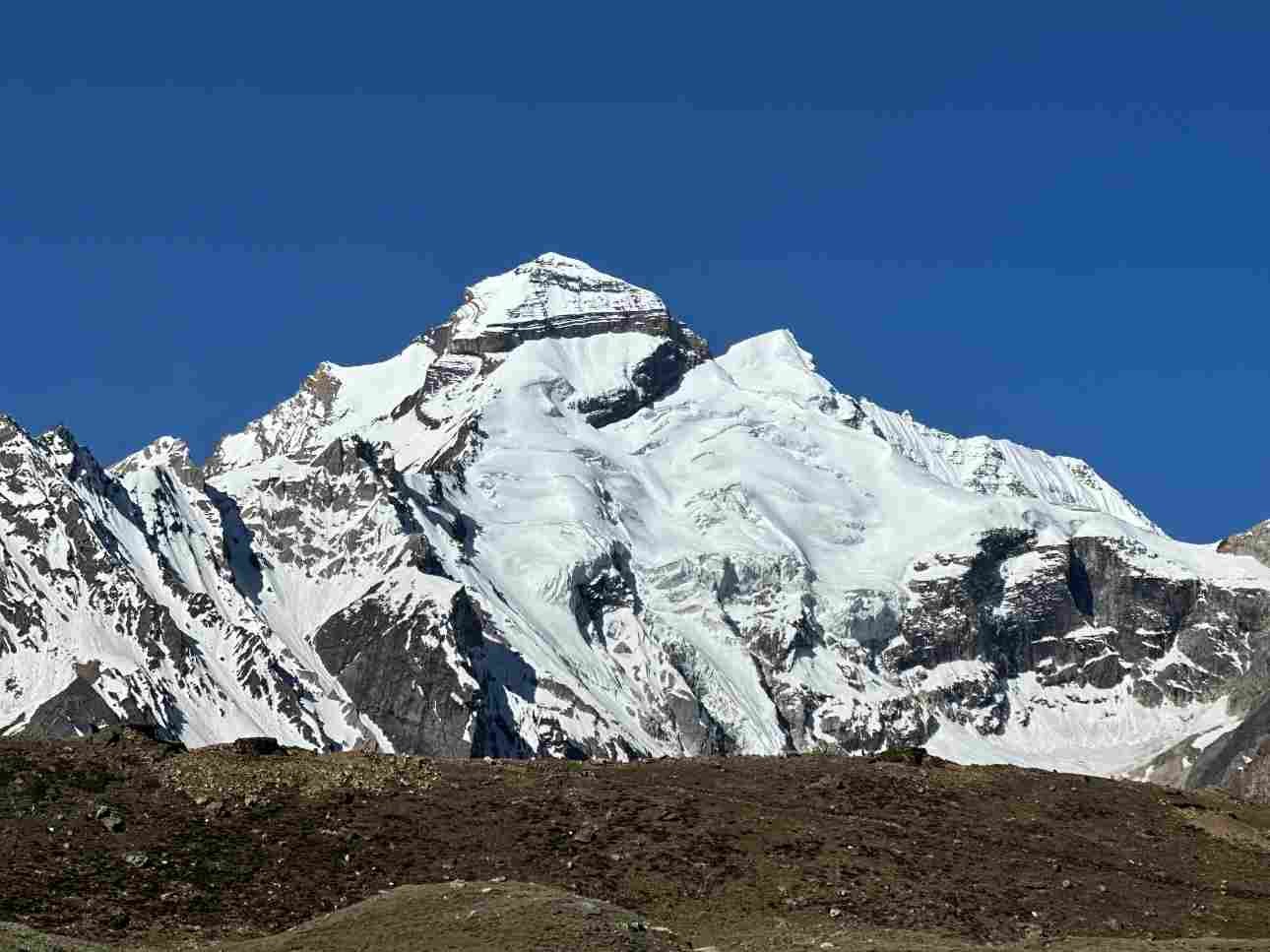
The left branch from Gunji leads northeast through Kuti Village to Jyolingkong — the sacred meadow at the base of Adi Kailash (5,945 metres) that is the spiritual centrepiece of the entire yatra.
Gunji to Jyolingkong: Key Details
- Distance from Gunji to Jyolingkong: approximately 30 km by the motorable 4x4 route
- Travel time: approximately 2.5 to 3 hours each way, depending on road conditions
- Key stop en route: Kuti Village (approximately 3,600 m) — the last inhabited settlement before Jyolingkong, associated in local tradition with Kunti (mother of the Pandavas); the ruinsof Pandav Kila and the agricultural site known as Bheem ki Kheti are nearby
- Jyolingkong altitude: approximately 4,572 metres (14,997 feet)
- At Jyolingkong, the pyramidal summit of Adi Kailash dominates the skyline in a view consistently described by pilgrims as overwhelming
- The ancient Shiva-Parvati temple at Jyolingkong is a significant ritual stop; Parvati Sarovar(also known as Gauri Kund) is a short 500 metre walk from the temple and is consideredsacred
- The full round trip from Gunji to Jyolingkong and back, including darshan time, typically takes a full day
Om Parvat from Gunji: The Right Branch Route to Nabhidhang
The right branch from Gunji leads northwest through Kalapani to Nabhidhang — the vehicle-accessible viewpoint from which the natural Om symbol on the face of Om Parvat is visible. This is one of the most extraordinary sights in the entire Himalayan pilgrimage circuit.
Gunji to Nabhidhang: Key Details
- Route: Gunji → Kalapani → Nabhidhang
- Kalapani altitude: approximately 3,600 metres — a sacred site marking the origin of the Kali River (Mahakali), which forms the India-Nepal international boundary; the ancient Kali Templeand Shani Temple are located here
- Vyas Gufa (the cave associated by local tradition with Sage Veda Vyasa) is located near Kalapani and is a meaningful stop for pilgrims with time
- Nabhidhang altitude: approximately 4,300 to 4,700 metres — vehicles can reach part of the way; a short final walk is required
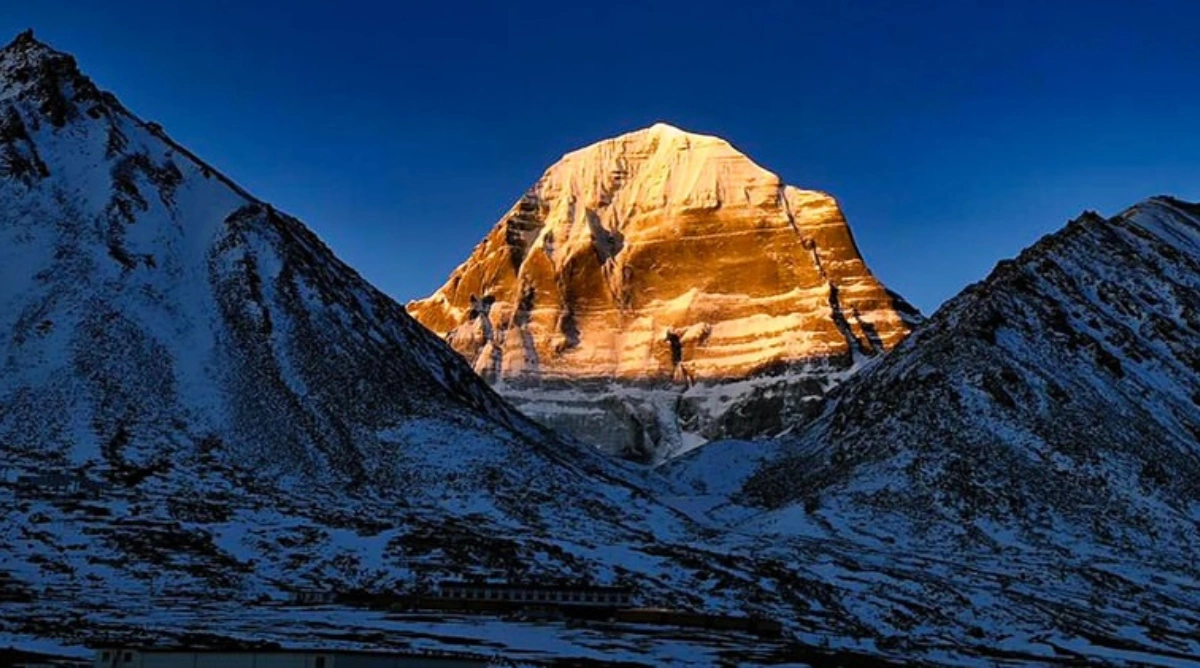
- At Nabhidhang, the natural om symbol — formed by snow adhering to the dark rock face of OmParvat (5,590 metres) — is visible on clear mornings; the symbol is most distinctly visible inearly morning light
- Nabhidhang is approximately 10 km from Lipulekh Pass — the India-Tibet-Nepal tri-junction; the final checkpoint here is strict and must be approached with all permits in hand
- Security note: do not photograph military infrastructure at Nabhidhang; follow all ITBP instructions without exception
Where to Stay in Gunji: Accommodation Options
Accommodation in Gunji is basic — and pilgrims should calibrate expectations accordingly before arrival. This is a remote Himalayan border village, not a tourist resort. What is available is functional, clean, and improving year on year thanks to the Vibrant Villages Programme.
KMVN Tourist Rest House
The KMVN (Kumaon Mandal Vikas Nigam) Tourist Rest House is the most reliable accommodation option for pilgrims on KMVN-organised yatras. Rooms are basic but clean, with attached or shared toilets. Meals are typically included as part of the yatra package price. Bookings are usually made in advance as part of the official yatra registration process — walk-in availability during peak season is not guaranteed.
Government Circuit Houses and Forest Rest Houses
Available for certain categories of travellers including government officials and, in some cases, pilgrims with prior arrangement. These offer a slightly higher standard of facility but have limited rooms and are typically not available for general tourist booking.
Private Homestays — A Growing Option
The Vibrant Villages Programme has catalysed a significant growth in homestay accommodation in Gunji. In May 2025, the registered homestay network in Gunji comprised 12 households. By mid-2026, that number had grown to 31 — visible evidence of the infrastructure investment flowing into this border village. Homestays offer basic but warm accommodation with home-cooked Kumaoni vegetarian meals and, for many pilgrims, the most authentic and memorable experience of the yatra.
Gunji in 2025 and 2026: What Has Changed
Gunji is not the isolated, little-known border village it was even five years ago. A series of significant developments have transformed its infrastructure, its accessibility, and its national profile.
Best Tourism Village 2024 Gold Award
In September 2024, India's Ministry of Tourism awarded Gunji the Best Tourism Villages 2024 Gold Award under the Vibrant Villages Programme — recognising its efforts in preserving cultural heritage, promoting sustainable tourism practices, and integrating local communities into tourism development. This was the highest national tourism recognition given to a border village in Uttarakhand and placed Gunji firmly on India's responsible tourism map.
ITBP Helipad MoU — January 2025
On 1 January 2025, the Uttarakhand Tourism Development Board signed an MoU with the ITBP to allow civilian use of ITBP helipads for expanded helicopter services under the Vibrant Villages Programme. This development has practical consequences for pilgrims: helicopter services to Adi Kailash via Gunji now reduce travel time dramatically for those who qualify, and the same helipad infrastructure improves emergency medical evacuation options for all yatris on the route.
Metalled Road Past Kuti Village — 2024
The completion of the metalled road past Kuti Village in 2024 made the Gunji to Jyolingkong route significantly more accessible and reliable, reducing journey time and improving safety on what was previously a rougher off-road track. This development also made the Adi Kailash darshan feasible as a 2-day add-on for day visitors to Gunji, expanding options for pilgrims with shorter windows.
Conclusion
Gunji village is far more than an overnight stop on the road to Adi Kailash. It is the gateway, the junction, the checkpoint, the base camp, and the acclimatisation station of one of India's most profound pilgrimage routes. Every pilgrim heading to Adi Kailash or Om Parvat passes through Gunji — and how well you understand and prepare for Gunji directly determines how successfully and safely the rest of your yatra unfolds. With the Vibrant Villages Programme investment, improved road access, new helicopter services, and a growing homestay network, Gunji in 2026 is more accessible than ever before — without having lost the raw, border-zone energy that makes it one of the most atmospheric places in the Indian Himalayas. Come prepared, come respectful, and let Gunji be the beginning of something that stays with you long after you return.