

- Uttarakhand Tours
- Chandan_singh
You have heard the claims. A cave that holds 33 crore gods. A Ganesha with no head. Four doors tied to the four ages. A passage that, people say, leads all the way to Kailash. It sounds too big to be real. Then you try to plan a visit, and the facts get messy. One page says the cave opens at 6 AM. Another says 10 AM. One says it is closed for two months. Another does not mention it.
This guide separates the belief from the facts. You get the Patal Bhuvaneshwar cave story and history, the Ganesha head legend, what you see inside, the opening time and rules, how to reach the cave and how to plan the visit. Legends are marked as legends. Where sources disagree, you see the range.
Patal Bhuvaneshwar at a Glance
| Detail | Figure |
|---|---|
| Location | Bhubneshwar village, near Gangolihat, Pithoragarh district |
| Elevation | About 1,350 m (4,429 ft) |
| Cave length | About 160 m |
| Depth from the entrance | About 90 feet |
| Steps down | About 82, steep, with iron chains |
| Time inside | About 30 to 60 minutes |
| Main deity | Shiva, with Ganesha, Vishnu and many other forms |
| Big festival | Maha Shivaratri |
What Is Patal Bhuvaneshwar Temple?
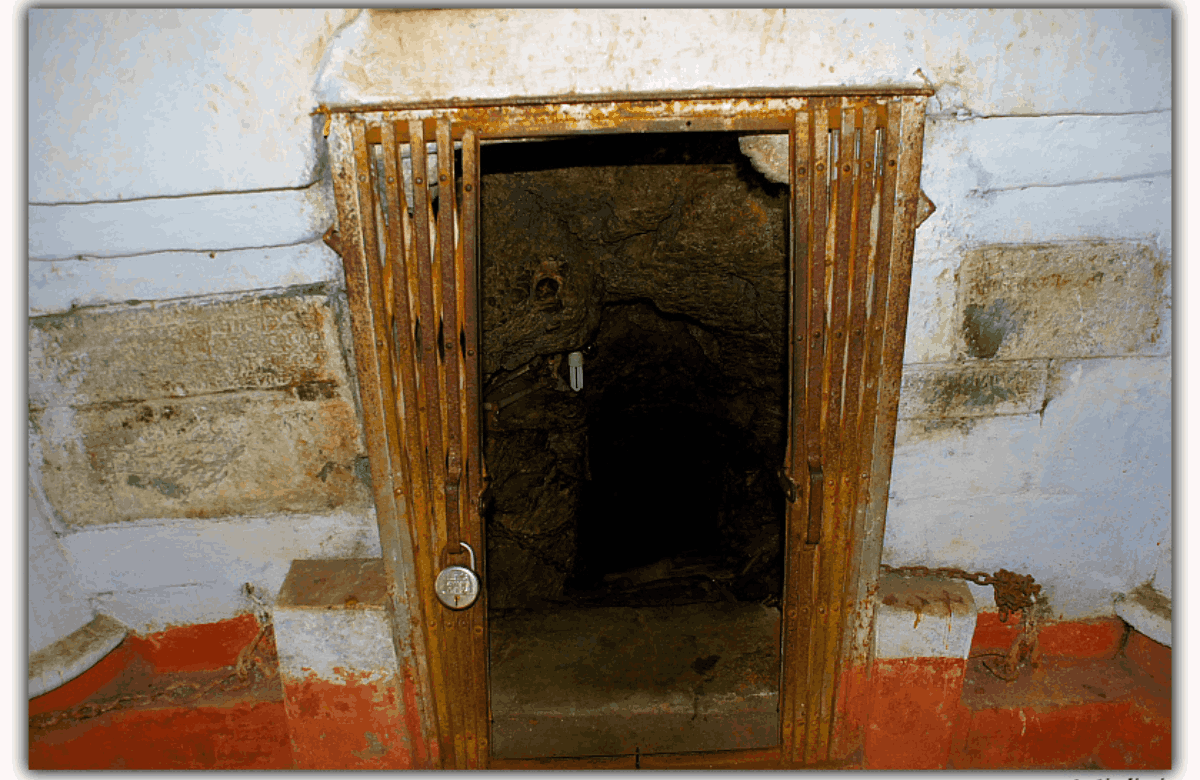
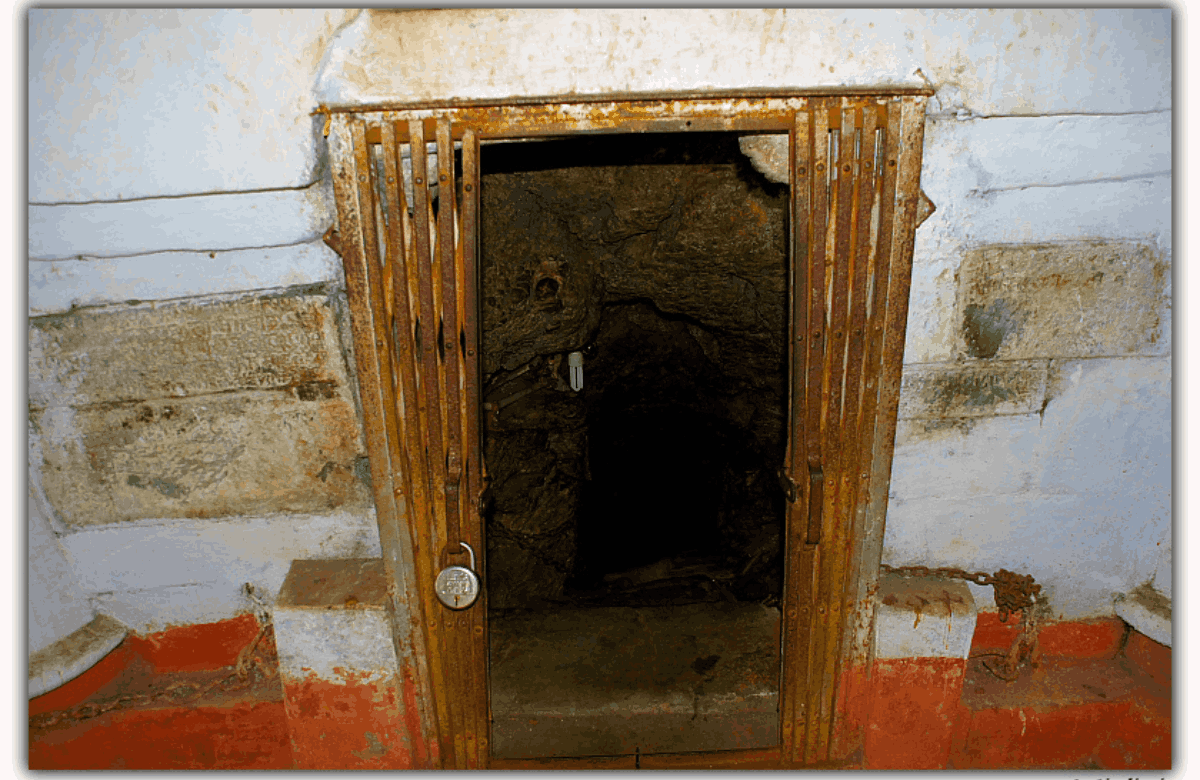
Patal Bhuvaneshwar is a Hindu cave temple built into a natural limestone cave. The name means roughly "the Bhuvaneshwar of the underworld". You enter through a narrow mouth and go down into a series of chambers, described as "caves within caves" and shaped over time by flowing water. The whole cave is electrically lit today, but the light is dim and the passages are tight. Pilgrims treat it as a place where the gods gather to worship Shiva. Local tradition says a visit here carries the merit of the Char Dham yatra. That is a belief, and it is part of why people come.
Patal Bhuvaneshwar Mystery: What Is Real and What Is Belief?
The mystery has three layers, and it helps to keep them apart.
What Is Natural and Observable
The cave is limestone, and limestone caves grow stalactites and stalagmites over thousands of years. Here they come in many shapes and colours. Water drips constantly, the floor stays wet and the air is cool. Guides say oxygen is low and slow to replace, which is why groups are kept small and priests keep oxygen cylinders for visitors who feel dizzy.
What Devotees See in the Formations
Priests and pilgrims read the shapes as gods. A long, coiled rock becomes Sheshnag. A cluster becomes Shiva's matted hair. A small stone mound becomes a lingam. This is how the cave is worshipped, and it is also the reason the place feels mysterious. You see the same rock, and the story gives it meaning.
What Is Claimed but Cannot Be Checked
The cave holds 33 crore gods. The term, as one source notes, is often read as "33 types" of deities.
An underground path leads to Kailash Mansarovar and other holy places.
A stone linga grows slowly, and the world will end when it touches the roof.
These are traditions. They are part of the faith around the cave, but they are not verified by science or by official records.
Patal Bhuvaneshwar Cave Story
The Patal Bhuvaneshwar cave story is told across the four ages, or yugas. Different accounts vary in detail, so the version below follows the common outline.
Treta Yuga: King Rituparna of the Suryavansh dynasty, who ruled Ayodhya, is said to have found the cave. In one telling, Sheshnag guides him inside, where he sees the gods and Shiva.
Dwapar Yuga: The Pandavas are said to have worshipped here, and one account says they rediscovered the cave.
Kali Yuga: Adi Shankaracharya is said to have found the cave again and established worship, and regular worship has continued since.
A tradition also says the Skanda Purana foretold that the cave would stay hidden for ages and open in the Kali Yuga. One guide says the cave appears in the Manaskhanda section of that text.
Treat these as sacred tradition. They explain why believers see the cave as ancient and sacred.
Patal Bhuvaneshwar Cave History
The legendary history stretches over ages. The documented history is shorter and more uncertain.
| Claim | What Sources Say |
|---|---|
| Adi Shankaracharya's visit | Several sources date it to 1191 CE. One page says the 8th century. Another notes a Kumaon Mandal page giving 1911, so the date is unresolved. |
| Who tends the cave | One guide says a Bhandari priest family has looked after it since Shankaracharya's time and acts as guides. |
| Management | One guide mentions the Archaeological Survey of India in connection with closures and photography permission. |
Because the sources disagree on dates, it is safest to write "traditionally linked to Adi Shankaracharya" and mention that the exact date varies. That keeps your account honest, and it still respects the tradition.
Patal Bhuvaneshwar Ganesha Head Legend
This is the part visitors ask about most. Hindu tradition tells that Shiva cut off Ganesha's head, and an elephant's head was later placed on his body. At Patal Bhuvaneshwar, tradition says the severed head landed near this cave. Inside, one guide describes a headless limestone shape called Adi Ganesh, said to be Ganesha's original form. Above it hangs a rock formation called the Brahmakamal. Water is said to drip from it onto the form below, and local belief calls this nectar. The cave is also said to hold a natural lingam and shapes linked to Shiva's matted hair.
Accounts differ. One guide does not mention a head legend at all, and another does not mention an "original head" in the cave. What the sources agree on is the headless Ganesha formation and the dripping water. The rest is tradition, so tell the story as tradition and let readers see it for themselves.
The Four Doors and the Four Yugas
Tradition says the cave has four doors tied to the four ages. Names vary between guides.
| Door | What Tradition Says |
|---|---|
| Randwar or Paap-dwar | Said to have closed when Ravana died |
| Rana-dwar | Said to have closed after the Mahabharata war |
| Dharmadwar | Open, and leads to Mokshdwar |
| Mokshdwar | Described as the final door, reached through Dharmadwar |
Another account describes four pillars for the four yugas, with the Kali Yuga pillar taller than the rest. One guide says two doors are closed now, and two will open in later ages.
These stories vary by teller, so quote them as tradition.
What You See Inside the Cave
One detailed guide lists the stops in the order you meet them. The path and the guide's explanation can change from day to day, so treat this as a rough tour.
Sheshnag: A coiled limestone form said to hold up the earth.
Vasuki and the Yagna Kund: A snake-like wall mark and a ritual pit linked in one account to King Janamejaya's snake sacrifice.
Adi Ganesh: The headless form with the Brahmakamal above it.
Char Dham shapes: Small formations said to stand for Kedarnath, Badrinath and Amarnath.
Shiva's matted hair: An icy, limestone formation with a natural lingam.
Airavat's footprints and the Parijata: Ceiling marks and a tree-like shape in one guide's telling.
The deepest point: A lingam described as crystal, linked to Shiva and Shakti.
Patal Bhuvaneshwar Cave Open Time and Timings
This is the biggest source of confusion, so here is the honest picture. Hours are not widely published, and local management can change them.
| Source Type | Timing Given |
|---|---|
| One travel guide | About 6 AM to 6 PM generally, with shorter winter hours |
| One temple guide | 10 AM to 4 PM |
| Other guides | No hours listed |
Your safest plan is to arrive in the morning. A guide recommends joining the first batch, since crowds are thinner before 10 AM and you keep daylight for the drive back.
Ask your hotel or the ticket counter for the day's exact timing, and do not plan a late-afternoon arrival.
Patal Bhuvaneshwar Cave Closure Period
One page says the cave is closed from about 11 August to 10 October because oxygen levels drop in the monsoon. The same page's table appears to mix up the year, so the dates may not be current.
Other guides simply advise avoiding July and August. Before you book travel for August to October, confirm that the cave is open.
Entry Fee and Tickets
Sources call the fee "nominal" and give no consistent figure. You buy a ticket at the counter and join the next group, and one guide says no advance booking or permit is needed.
Guide charges are paid separately per group in one account. Carry small cash.
Rules, Rituals and Etiquette
Photography: Generally prohibited inside. One guide says phones and cameras are not allowed, bags and electronics go in lockers, and photography needs prior ASI permission. Photos can be bought on site.
Drones: Not permitted around the temple area, per one guide.
Footwear: One guide says shoes are removed before entry.
Offerings: Water, milk, bel leaves and flowers are mentioned.
Behaviour: Follow the priest-guide, keep voices low and do not touch the formations.
The Descent: Is It Safe and Who Should Skip It?
The cave is reached by about 82 steep, rock-cut steps and a narrow passage. You may need to turn sideways, lower your head or crawl through a tunnel. Iron chains give support, and the floor is wet.
Going down takes 10 to 15 minutes, and you spend 30 to 45 minutes inside.
Keep these points in mind:
Keep both hands on the chains, and wear shoes with grip until you reach the entrance.
Avoid a heavy meal before you go.
Skip the descent if you have claustrophobia, a heart or breathing condition, or serious knee or back problems.
If you feel dizzy, tell the guide at once. Priests keep oxygen cylinders, according to one account.
Best Time to Visit Patal Bhuvaneshwar
| Season | What to Expect |
|---|---|
| March to June | Pleasant weather and easy roads. A good window. |
| July to August | Landslides, slippery floors and possible closure. Avoid. |
| September to November | Comfortable weather, but check the closure period at the start of the season. |
| December to February | Cold, with short daylight. Possible, but plan your hours. |
One guide recommends February to June. Another lists March to June and September to November. Maha Shivaratri draws large crowds, so expect queues if you go then.
How to Reach Patal Bhuvaneshwar
The cave is in Pithoragarh district, and you reach it by road. The motorable road ends about half a kilometre from the cave, and the last stretch is a short walk.
| From | Approx. Distance |
|---|---|
| Gangolihat | About 14 km, 30 to 40 minutes |
| Berinag | About 20 to 25 km |
| Chaukori | About 37 km (one guide) |
| Pithoragarh | About 90 km, around 3 hours |
| Almora | About 110 km, 3.5 to 4 hours |
| Kathgodam (railway) | About 190 to 270 km (sources differ) |
| Tanakpur (railway) | About 154 to 165 km |
| Pantnagar airport | About 224 to 271 km (sources differ) |
| Delhi | About 500 to 530 km, 12 to 14 hours |
One guide suggests the route Kathgodam, Almora, Jageshwar, Chaukori and then the cave, with Chaukori or Gangolihat as an overnight base.
Use a private car with a driver who knows hill roads, and check road conditions before you go, since landslides can close sections. Mobile signal and UPI are patchy beyond Berinag, so carry cash and offline maps.
Where to Stay and Eat
One guide mentions guesthouses and a dharamshala near the site. Chaukori and Berinag offer more choices. Food near the cave is basic, so carry water and snacks.
Places to Visit Near Patal Bhuvaneshwar
Hat Kalika Temple, Gangolihat: A major Shakti shrine about 13 to 14 km away.
Vridh Bhuvaneshwar: A temple and sculpture museum mentioned by one guide.
Berinag: The Naga temple area and tea gardens.
Chaukori: Tea gardens and Himalayan views, and a natural halt on the way.
Jageshwar Dham: A group of ancient temples, about 115 km by one guide.
A Suggested Patal Bhuvaneshwar Trip Plan
This is a suggested plan. Adjust it to the season and the roads.
| Day | Plan |
|---|---|
| 1 | Kathgodam to Almora, with a stop at Jageshwar if time allows, then on to Chaukori or Gangolihat for the night. |
| 2 | Early visit to the cave for the first batch. Hat Kalika temple afterwards, then drive on to Munsiyari or back towards Almora. |
Add a night in Chaukori or Munsiyari if you want a slower pace.
Travel Tips
Arrive early and confirm the day's timing at the counter.
Carry cash. Cards and UPI may not work.
Leave bags and electronics in the locker.
Dress warmly. The cave is cold and damp.
Check road status and the closure notice before you travel.
Booking a Patal Bhuvaneshwar Trip
Patal Bhuvaneshwar is a Day 6 stop on our 8-day Adi Kailash and Om Parvat tour from Delhi and on our Adi Kailash Premium package.
If you are planning a Kumaon trip around the cave, our Munsiyari tour packages are a good starting point. If you are booking a package, ask for the inclusions in writing:
Pickup point
Vehicle
Number of nights
Whether the cave visit fee and guide are included
What happens if the cave or the road is closed
Final Thoughts
Patal Bhuvaneshwar is a place where nature and faith meet. The cave is a real limestone wonder, and the stories give it a depth that no guidebook can. Go early, go with respect, confirm the timing and the closure dates, and let the guide tell the story as it has been told for generations.