

- Uttarakhand Tours
- Chandan_singh
You search for "Baijnath Temple" and find three different states, two different Shiva temples and conflicting timings. Which one is in Uttarakhand? Is it a Jyotirlinga? How far is it from Almora or Bageshwar? And is it worth the drive?
This guide answers these questions. It covers the Baijnath Temple in Bageshwar district, Uttarakhand—a peaceful complex of ancient stone shrines on the banks of the Gomti River. You will find information about its history, architecture, things to see, timings, distances, routes, the best season to visit and suggested itineraries. Where sources disagree, the differences are clearly mentioned instead of presenting uncertain information as fact.
Baijnath Temple at a Glance
| Detail | Information |
|---|---|
| Temple | Baijnath (Vaidyanath) Temple Complex |
| Location | Baijnath, Bageshwar district, Uttarakhand |
| River | Gomti |
| Elevation | Approximately 1,125 metres |
| Built by | Katyuri dynasty |
| Construction period | 12th century (Wikipedia); 9th–12th century (tourism portal) |
| Architecture | Nagara style |
| Complex size | 18 stone temples and 102 stone images (Wikipedia); 17 subsidiary shrines (other guides) |
| Entry | Free |
| Main festivals | Maha Shivratri and Makar Sankranti |
| Nearest railway station | Kathgodam |
| Nearest airports | Pantnagar and Jolly Grant (Dehradun) |
1. Where Is Baijnath Temple?
The Baijnath Temple complex stands in the eastern part of Baijnath town, in Bageshwar district of Uttarakhand. It is situated on the left bank of the Gomti River in the Kumaon hills, close to Kausani and Garur. The surrounding valley is green, open and peaceful, which adds to the appeal of the temple.
Is Baijnath Temple in Almora?
No. Baijnath Temple is located in Bageshwar district, not Almora. Almora is approximately 70 km away by road, so searches for "Baijnath Temple Almora" generally refer to the route from Almora. The travel details are covered below.
Baijnath Temple Uttarakhand vs Other Baijnath Temples
Several temples share the name Baijnath, which can create confusion while searching online or booking travel.
Baijnath, Bageshwar, Uttarakhand: The Katyuri-era temple complex covered in this guide.
Baidyanath, Deoghar, Jharkhand: The temple counted among the twelve Jyotirlingas, according to one travel report.
Baijnath, Himachal Pradesh: A separately located temple that also appears in search results.
Always check the state and destination carefully before booking tickets, taxis or accommodation.
2. Baijnath Temple History
Who Built Baijnath Temple, and When?
The Baijnath Temple complex was built by the Katyuri kings. According to Wikipedia, the rulers developed a large group of temples dedicated to Vaidyanath Shiva after moving their capital to Kartikeyapura. The complex is placed in the 12th century CE, and several inscriptions dated to 1202 CE have reportedly been found at the site.
Different sources provide slightly different construction dates:
| Source | Date given |
|---|---|
| Wikipedia | 12th century CE; inscriptions dated 1202 CE |
| National tourism portal | 9th–12th century |
| Temple listing site | Approximately 1150 CE |
For general writing, "12th century" is the safest date to use. The broader 9th–12th-century range can also be mentioned when explaining the differences between sources.
The Name Baijnath
Wikipedia states that "Baijnath" is a corrupted form of "Vaidyanath". Vaidyanath means the Lord of Healers and is a name of Lord Shiva. This is one reason several temples across India have similar names.
The Legend of Shiva and Parvati
Local tradition connects the area with the wedding of Lord Shiva and Goddess Parvati. The wedding is believed to have taken place near the meeting point of the Gomti and Garur Ganga rivers.
Another local legend says that the temples were built in a single night, leaving two unfinished. The national tourism portal records these stories. They should be understood as religious folklore rather than documented historical events.
Restoration and Historical Damage
The temple complex has experienced restoration as well as damage over the centuries.
A Katyuri queen is credited with ordering the construction of the stone steps leading down to the river.
King Gyan Chand reportedly restored and rebuilt the temples.
Rohilla raiders plundered the complex in 1743–1744.
The shikhar, or spire, of the main shrine was reportedly destroyed during the attack.
Despite this damage, the complex continues to preserve important examples of traditional stone temple architecture.
Protected Monument
The Archaeological Survey of India protects the complex as a monument of national importance, according to one listing. Wikipedia also notes that some of the stone images are still worshipped, while others are reserved by the ASI.
3. Is Baijnath Temple a Jyotirlinga?
This is one of the most common questions about the temple.
No. The Baijnath Temple in Bageshwar, Uttarakhand, is not counted among the twelve Jyotirlingas in the sources consulted for this guide.
One travel report directly states that the Shiva temple at Baijnath is not a Jyotirlinga and identifies the Baidyanath Temple in Deoghar, Jharkhand, as one of the twelve. The Wikipedia entry for the Uttarakhand temple complex does not make a Jyotirlinga claim. The Uttarakhand temple is still an important and historic Shiva shrine. Pilgrims visit for its sanctum, the Parvati image and its peaceful riverside setting. It is best described as a major Shiva temple rather than a Jyotirlinga.
4. What to See at Baijnath Temple
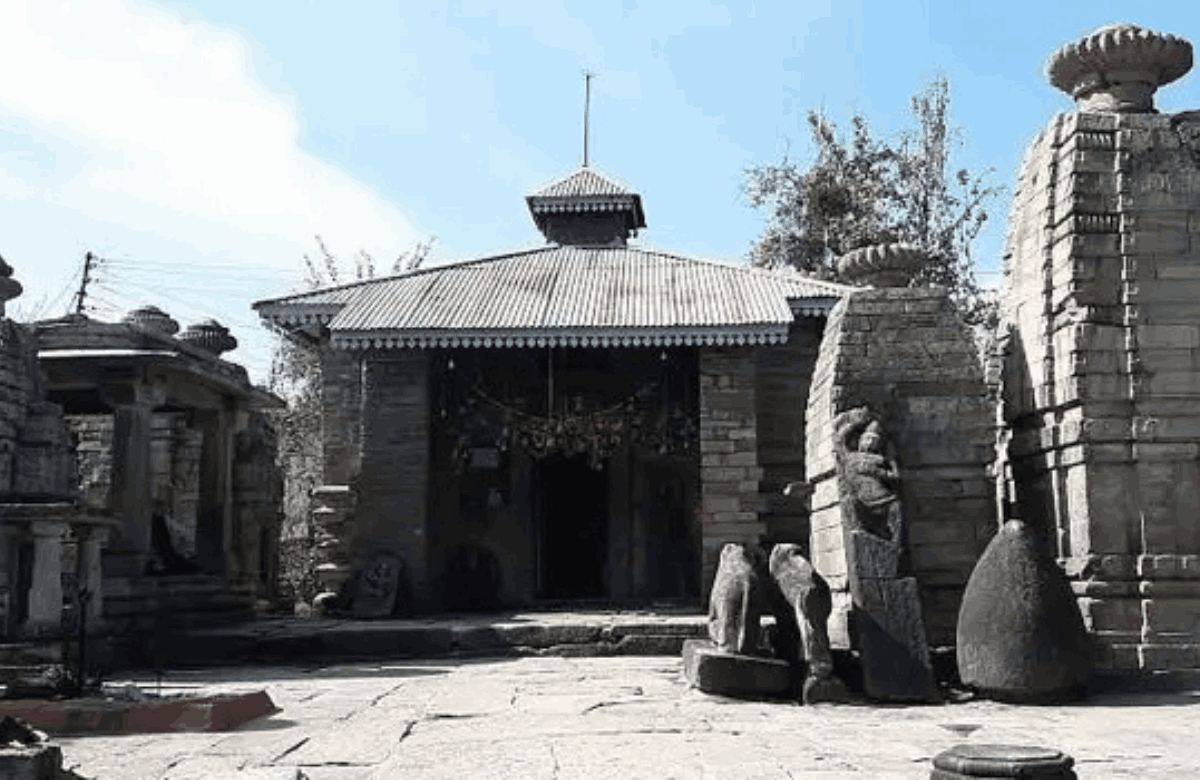
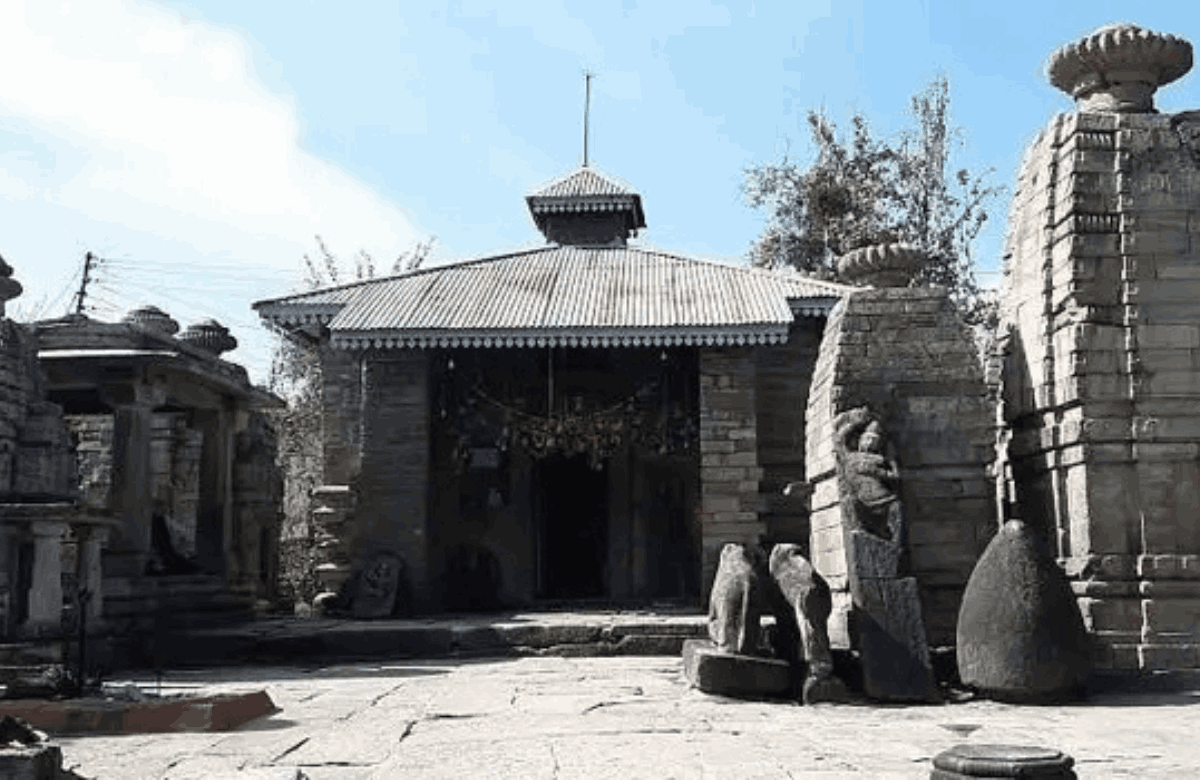
The Baijnath Temple complex is worth visiting for its ancient stone architecture, religious sculptures, riverside setting and peaceful atmosphere. The main shrine attracts most devotees, but the smaller temples and carved images are equally interesting.
The Main Vaidyanath Temple
The main shrine is dedicated to Lord Shiva as a lingam and follows the Nagara style of architecture. It stands among a cluster of smaller stone shrines. Wikipedia counts 18 stone temples in the complex, while other guides mention 17 subsidiary shrines around the main temple.
The Parvati Image
One of the most interesting features of Baijnath Temple is the image of Goddess Parvati shown beside Lord Shiva in the sanctum. One guide describes this arrangement as a rare feature among Shiva temples. Wikipedia describes her grey chloride schist image as an outstanding example of art. According to the national tourism portal, the goddess wears a crown decorated with 26 miniature figures.
Visitors interested in ancient sculpture should take time to observe the fine carving.
Carved Images Around the Complex
The temple complex contains several religious sculptures. Guides mention the following figures:
Nritya Ganapati
Karttikeya
Narasimha
Brahma
Mahishasuramardini
Sapta Matrikas
Surya
Garuda
Kubera
A life-size image of Kal Bhairava stands outside the Vaidyanath Temple. Wikipedia counts 102 stone images across the complex.
The Riverside Steps
Stone steps lead down towards the Gomti River. They provide a peaceful place to sit after darshan, especially during the morning. According to the source material, the steps were commissioned by a Katyuri queen.
Baijnath Temple Uttarakhand Photos: Best Photography Spots
Baijnath Temple is an attractive destination for visitors interested in architecture and photography. One guide states that photography is generally allowed in the outer complex but not inside the sanctum. Confirm the rules with temple staff on the day of your visit.
Good photography subjects include:
The cluster of stone shrines against the surrounding hills.
Carved panels and images on the outer walls.
The riverside steps and the Gomti River.
The spire of the main shrine in the early morning or late afternoon.
Avoid using flash near the deity. Do not climb on the old stonework. Drone use may require permission from the local administration.
How Much Time Should You Spend at Baijnath Temple?
Plan approximately 30–45 minutes for a quick visit, or around one hour if you want to explore the carvings and spend time beside the river. Add more time if you also plan to visit Kot Bhramari Devi Temple and the nearby lake.
5. Baijnath Temple Timings, Aarti and Booking
Baijnath Temple Timings
Published timings do not agree across sources. Use the following information as a planning range and confirm the current schedule locally.
| Source | Reported timings |
|---|---|
| National tourism portal | 6:00 AM to 9:00 PM |
| Temple listing site | Summer: 5:00 AM to 7:00 PM; Winter: 6:00 AM to 6:00 PM |
| Travel guide | 6:00 AM to 7:00 PM |
| Another guide | Open daily, morning to evening |
Practical suggestion: Arrive between 6:00 AM and 5:00 PM. During winter, do not depend on evening entry.
Pooja and Aarti
One online listing publishes timings for Shodashopachar, Abhishekam and Shringar Pooja. However, the reported timings overlap and are unclear. Ask temple staff or a local priest for the current aarti and abhishekam schedule on the day of your visit.
Entry Fee and Booking
Entry fee: Free, according to one guide. Donations are welcome.
Online booking: No official online darshan or pooja booking system is known from the sources consulted.
Pooja arrangements: Contact the temple office or a local priest and confirm the cost before making arrangements.
Accommodation and transport: Book early for Maha Shivratri, Makar Sankranti and the Shravan month.
Festivals and Crowds
Maha Shivratri and Makar Sankranti are the main festivals associated with Baijnath Temple. According to one guide, crowds may also be heavier on Mondays and between 8:00 AM and 11:00 AM.
For a quieter visit, arrive early on a weekday outside major festival dates.
6. Baijnath Temple Distance and How to Reach
Baijnath Temple is connected by road to nearby destinations such as Bageshwar, Kausani, Garur and Almora. You can reach the temple by private vehicle, taxi or local bus, depending on your starting point.
Baijnath Temple Uttarakhand Distance by Road
The following are approximate road distances recorded in the source material.
| Starting point | Approximate distance | Notes |
|---|---|---|
| Kausani | 16 km | Two sources agree |
| Bageshwar | 20–22 km | Sources report 20 km and 22 km |
| Almora | About 70 km | One guide |
| Kathgodam Railway Station | 148–160 km | Sources vary |
| Pantnagar Airport | 184–185 km | Two sources |
| Dehradun | About 300 km | One listing |
| Delhi | About 460 km | Measured to Delhi Airport, not the temple; approximate |
Distances and travel times depend on the route, traffic and road conditions.
Bageshwar to Baijnath Temple Distance
The distance from Bageshwar to Baijnath Temple is approximately 20–22 km by road. Local taxis and shared vehicles serve this route. Confirm departure times at the Bageshwar taxi or bus stand.
Almora to Baijnath Bageshwar Distance
The distance from Almora to Baijnath Temple is approximately 70 km by road. Plan roughly two to three hours for the journey on hill roads. This is an estimate, and traffic and weather can affect travel time.
How to Reach Baijnath Temple by Air
The nearest airport options listed in the source material are:
Pantnagar Airport
Jolly Grant Airport, Dehradun
Pantnagar is closer to Baijnath. From either airport, continue by taxi or bus towards the Kumaon region.
How to Reach Baijnath Temple by Train
Kathgodam is the nearest railway station mentioned in the source material. Taxis and buses operate from there towards different destinations in Kumaon. After reaching Kathgodam, continue towards Bageshwar, Kausani or Garur and take a local ride to Baijnath.
How to Reach Baijnath Temple by Road
Baijnath is accessible by road from nearby towns.
Hire a taxi from Kausani.
Travel from Bageshwar by local taxi or bus.
Reach Baijnath through Garur.
Drive from Almora using the connecting hill roads.
Roads can close during heavy rainfall. Check local road conditions before leaving.
7. Places to Visit Near Baijnath Temple
If you are visiting Baijnath Temple, you can also explore several nearby attractions in the Kumaon region.
| Attraction | Approximate distance or location | Why visit |
|---|---|---|
| Kot Bhramari Devi Temple | About 3 km | Nearby religious shrine |
| Baijnath Lake | Near the temple complex | Boating and a short scenic stop |
| Kausani | About 16 km | Hill town known for Himalayan views |
| Pinnath | About 8 km from Kausani | Nearby trekking and sightseeing destination |
| Rudradhari Falls and Caves | About 12 km from Kausani | Waterfall and cave surroundings |
| Bageshwar | About 20–22 km | District town and religious destination |
Distances are approximate and should be checked against your chosen route.
8. Best Time to Visit Baijnath Temple
Baijnath Temple can be visited during different parts of the year, but weather and road conditions influence the overall experience.
March to June: Summer
Summer is a favourable period for visiting Baijnath Temple. The weather is generally comfortable for sightseeing and travelling through the Kumaon hills. It is also a good season to combine Baijnath with Kausani, Bageshwar and other nearby attractions.
October to November: Autumn
October and November are recommended by one guide as favourable months for visiting Baijnath Temple. The weather can be suitable for exploring the temple complex and taking photographs. One guide also lists September as a possible visiting month.
July to September: Monsoon
Monsoon brings rainfall to the Kumaon region. Landslides, slippery roads and travel delays can occur. Avoid travelling during heavy rainfall unless your schedule is flexible. Check local weather and road conditions before departure.
December to February: Winter
Winter can be cold in the Kumaon region. Carry warm clothing, particularly if you plan to visit early in the morning or stay overnight in nearby hill towns.
Best Time at a Glance
| Season | Months | Travel advice |
|---|---|---|
| Summer | March–June | Pleasant weather and good for sightseeing |
| Monsoon | July–September | Check for rainfall and landslide alerts |
| Autumn | October–November | Good period according to one guide |
| Winter | December–February | Cold weather; carry warm clothes |
9. Where to Stay Near Baijnath Temple
Accommodation is available in and around Baijnath, Garur, Kausani and Bageshwar. Rates vary by season, so the original source does not provide specific prices.
Baijnath: Convenient for visitors who want to explore the temple early in the morning.
Garur: An option for travellers who prefer staying near the local transport route.
Kausani: Offers the widest choice of accommodation, from budget lodges to resorts with mountain views. It is also a convenient base because it is approximately 16 km from Baijnath.
Bageshwar: Suitable for visitors who want to explore the district town and nearby attractions.
Accommodation tip: Book early during Maha Shivratri, Makar Sankranti, long weekends and other busy travel periods.
10. Travel Tips for Baijnath Temple
Keep these practical tips in mind to make your visit comfortable and respectful.
Dress modestly and remove your shoes at the entrance.
Carry cash for donations and small purchases.
Start early to avoid crowds and enjoy softer natural light.
Carry drinking water and a light jacket because hill weather can change quickly.
Respect worshippers, keep your voice low and avoid flash photography.
Do not climb on or damage the old stone structures.
Confirm temple timings and photography rules with staff on arrival.
Check road conditions before travelling during the monsoon.
11. Who Should Visit Baijnath Temple?
Baijnath Temple offers something for different kinds of travellers.
Pilgrims: For Shiva darshan and the distinctive Shiva and Parvati sanctum.
History and architecture enthusiasts: For Katyuri-era stonework and carved images.
Photographers: For the stone shrines, surrounding hills and riverside steps.
Families and slow travellers: For a relatively short and peaceful stop between Kausani and Bageshwar.
Final Thoughts
Baijnath is a quiet stone complex beside the Gomti, with a rare Shiva and Parvati sanctum and carved images from the Katyuri era. It rewards slow visitors and pairs well with Kausani, Bageshwar and Kot Bhramari Devi. Check timings locally, start early and book your stay ahead for festival dates.
Planning more temple stops in Kumaon? Read our other guides below, then book your stay and transport before the season fills up.