

- Uttarakhand Tours
- Chandan_singh
Uttarakhand is home to many ancient temples, and Katarmal Sun Temple is one of the most remarkable historical sites in the Kumaon region. Located on a hill near Almora, this ancient temple complex is dedicated to Surya, the Sun God, and is known for its traditional stone architecture, smaller surrounding shrines and peaceful mountain setting. The temple is generally dated to around the 9th century CE and is attributed to King Katarmalla of the Katyuri dynasty. Although the main temple is now partly ruined, it remains an important destination for travellers interested in ancient Indian architecture, history and the cultural heritage of Uttarakhand. Planning a visit can raise several questions. How far is Katarmal Sun Temple from Almora? Who built it? What are the opening timings? How difficult is the uphill walk? And can you combine the visit with Kasar Devi or Ranikhet?
This guide covers everything you need to know about Katarmal Sun Temple, including its history, location, timings, entry information, walking route, distances from nearby destinations and practical travel tips.
Katarmal Sun Temple: At a Glance
| Detail | Information |
|---|---|
| Temple name | Katarmal Sun Temple |
| Other names | Katarmal Surya Mandir, Katarmal Temple |
| Main deity | Surya, the Sun God |
| Location | Near Kosi village, Almora district, Uttarakhand |
| Approximate distance from Almora | 17–19 km |
| Historical attribution | King Katarmalla of the Katyuri dynasty |
| Approximate age | Generally dated to the 9th century CE |
| Temple complex | One main temple and 44 smaller shrines, according to sources |
| Approximate elevation | 2,116 metres, according to one listing |
| Access | Road journey followed by an uphill walk |
| Temple timings | Vary by source; confirm locally |
| Entry fee | One guide reports a small fee but gives no amount |
| Nearest major railway station | Kathgodam |
| Nearest commonly listed airport | Pantnagar |
Note: Published sources differ on the temple's age, opening hours, walking distance and travel distances. Figures in this guide are approximate where indicated.
Quick Answer: Where Is Katarmal Sun Temple?
Katarmal Sun Temple is located near Kosi village in Almora district, Uttarakhand, approximately 17–19 km from Almora town. It is dedicated to Surya, the Sun God, and is attributed to King Katarmalla of the Katyuri dynasty. The temple complex includes a principal shrine and 44 smaller shrines, according to the sources reviewed. Visitors reach the access road by vehicle and then walk uphill to the temple. The site is generally dated to around the 9th century CE. The original idol is reported to have been stolen, while the carved wooden door and panels from the sanctum are now housed in the National Museum in Delhi.
Where Is Katarmal Sun Temple Located?
Katarmal Sun Temple is situated in the Kumaon region of Uttarakhand, on a hill near Kosi village in Almora district. It is accessed from the Almora–Ranikhet road. The temple's hilltop location gives it a quiet setting surrounded by the landscapes of the Kumaon hills. The final section of the journey involves an uphill walk from the road.
Location Details
District: Almora, Uttarakhand
Nearby village: Kosi
Approximate coordinates: 29.633° N, 79.615° E
Distance from Almora: Around 17–19 km by road
Access road: Branches off the Almora–Ranikhet route
Walking section: An uphill path involving steps and uneven ground
Are Katarmal Temple, Katarmal Surya Mandir and Sun Temple Almora the Same?
Yes. The names Katarmal Temple, Katarmal Surya Mandir, Katarmal Sun Temple Almora and Sun Temple Almora generally refer to the same temple complex. Using the word “Katarmal” in your search is helpful because Uttarakhand and other parts of India have several temples dedicated to the Sun God.
Why Is Katarmal Sun Temple Famous?
Katarmal Sun Temple is known for its historical importance, stone architecture and association with the worship of Surya.
Its main attractions include:
An ancient temple generally dated to the 9th century CE.
A main shrine surrounded by smaller temples.
Carved stone panels and traditional architectural features.
A hilltop location with views of the surrounding valleys.
A history associated with the Katyuri dynasty.
Carved wooden doors and panels that are now preserved in Delhi's National Museum.
The combination of architecture, religious heritage and a peaceful location makes Katarmal an interesting stop for visitors exploring Almora.
Katarmal Sun Temple History: Who Built It and When?
Katarmal Sun Temple is generally attributed to King Katarmalla of the Katyuri dynasty. It is considered an important example of the historical temple-building traditions of the Kumaon region. However, sources differ on the exact date of construction, so the temple's age should be described cautiously.
Who Built Katarmal Sun Temple?
Historical and travel accounts attribute the temple to King Katarmalla, a ruler associated with the Katyuri dynasty. The dynasty played an important role in the history of the Kumaon region. The temple's traditional attribution to Katarmalla is widely repeated in descriptions of the site.
When Was Katarmal Sun Temple Built?
Most sources consulted for this guide date the temple to the 9th century CE. One temple listing gives a broader construction period between the 6th and 9th centuries. A local temple tradition also claims that Katarmal is approximately 200 years older than the Sun Temple at Konark. This should be treated as a traditional claim rather than a conclusively established historical date. For a cautious description, it is best to refer to Katarmal as a temple generally dated to around the 9th century CE.
Which God Is Worshipped at Katarmal Sun Temple?
The temple is dedicated to Surya, the Sun God. The deity is identified in the source material by the names Burhaditya or Vraddhaditya. One travel account describes the main religious figures as Burhaditya and Vraddhaditya, accompanied by representations of Parvati and Shiva, and Lakshmi and Narayana.
The Temple Complex
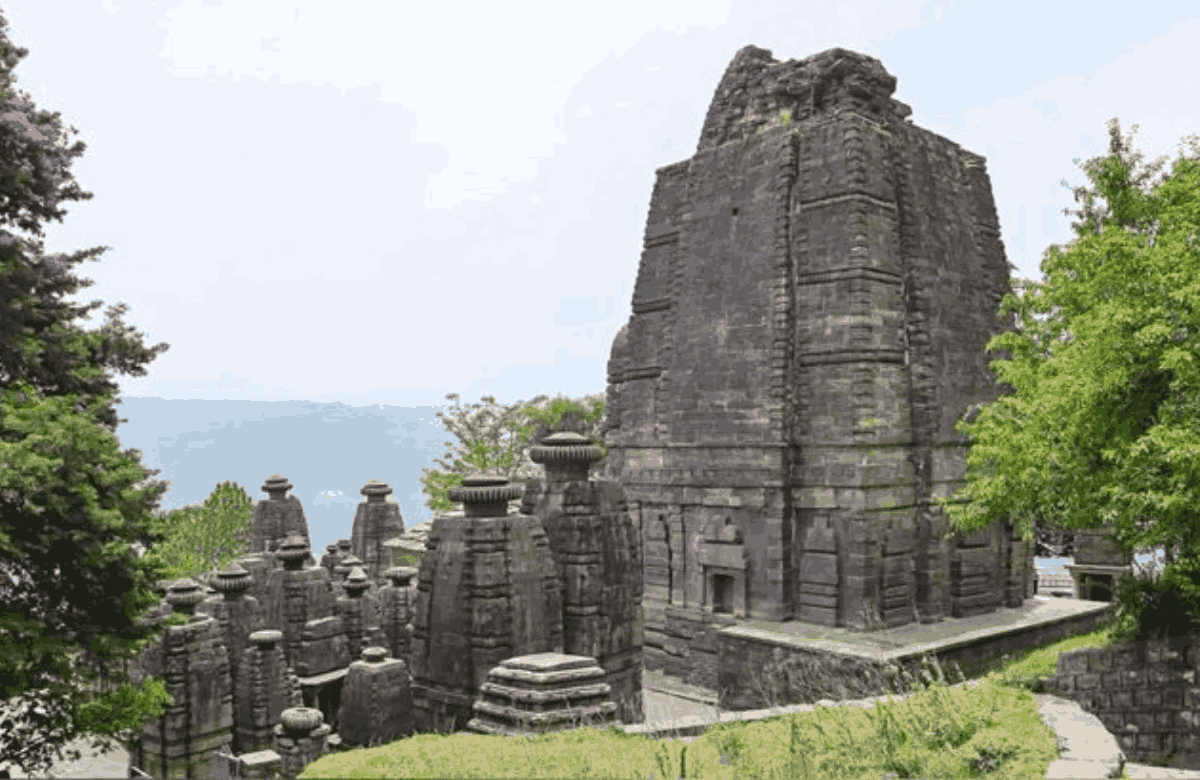
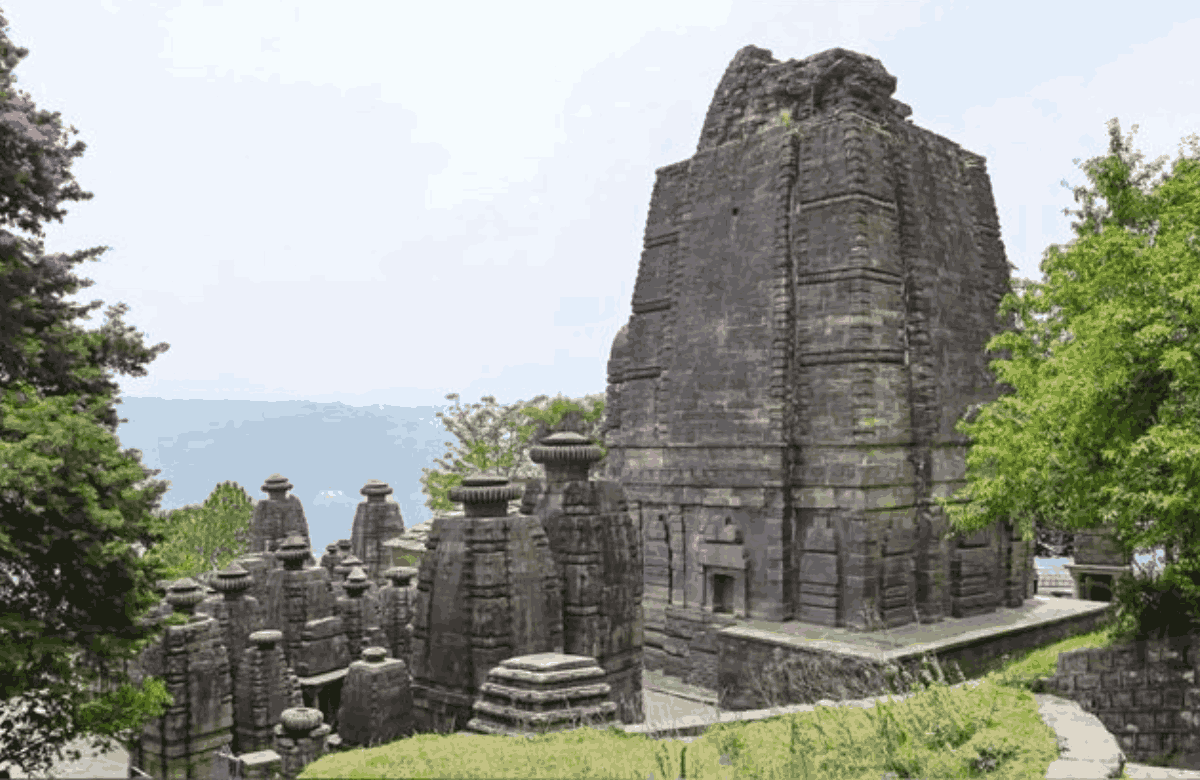
The complex consists of a principal temple surrounded by smaller shrines. Two sources cited in the original guide report a total of 44 smaller temples. The main structure survives in a partly ruined state. The site is also described by travel sources as a protected monument under the Archaeological Survey of India (ASI).
The Stolen Idol and the Carved Wooden Door
One of the most notable details in the temple's history is the reported loss of its original idol.
According to the sources reviewed:
The original idol was stolen.
The carved wooden door and panels from the sanctum were removed and are now housed in the National Museum in Delhi.
One guide reports that regular ritual worship is no longer performed at the temple.
The exact date of the theft is not consistently established in the available accounts. The date of the idol and the date of its theft should not be treated as the same event unless a reliable source confirms it.
What Does the Architecture Reveal?
Katarmal Sun Temple features traditional stone construction and carved panels on its principal structure. Its remaining architecture offers visitors an opportunity to observe the craftsmanship associated with historical temples in the Kumaon region. Visitors interested in architectural comparisons can also explore the Nanda Devi Temple in Almora town.
What to See at Katarmal Sun Temple
A visit to Katarmal involves more than reaching the temple itself. The uphill walk, surrounding shrines, stone carvings and views all contribute to the experience.
1. The Main Temple
The principal temple is the central attraction. Although it survives in a partly ruined state, its stone construction and carved panels reflect its historical importance. Take time to observe the remaining architectural details without climbing on or touching fragile structures.
2. The Smaller Shrines
The main temple is surrounded by smaller shrines. Two sources in the original guide report that there are 44 of these. Walking around the complex allows visitors to appreciate how the shrines are arranged around the main building.
3. The Sunlight Opening
A travel report mentions an opening in the temple structure associated with sunlight entering the building. Another guide describes the sun's rays falling on the place where the main idol once stood during winter. These descriptions are part of the available accounts; the precise alignment has not been independently established by the sources reviewed.
4. Views of the Surrounding Valleys
The temple's hilltop location offers views of the surrounding landscape. Visitors can enjoy the peaceful setting while exploring the site. Morning or late-afternoon light may be suitable for photography, according to one travel report.
Katarmal Sun Temple Trek: Walking Distance and Difficulty
After reaching the road-access point, visitors must walk uphill to reach the temple complex.
Sources describe the distance differently:
One guide gives an uphill walk of approximately 1 km.
Other sources describe a distance of around 1–2 km.
Another guide describes the climb as a steep 2 km walk.
A trip report refers to it as a short hike from the roadhead.
Because the estimates vary, check the current access point and walking route locally.
Is the Climb Difficult?
The walk involves stone steps and uneven ground. One source describes the route as steep, so visitors should allow enough time and avoid rushing.
For a comfortable visit:
Wear shoes with good grip.
Carry drinking water.
Walk at a steady pace.
Protect yourself from the sun.
Take extra care during or after rain, when the path may be slippery.
One guide suggests allowing approximately 45 minutes to 1.5 hours for the visit. Your time may vary depending on walking speed and how long you explore the temple.
Katarmal Sun Temple Photos: What Can You Photograph?
Katarmal Sun Temple is a subject of interest for travellers and photography enthusiasts because of its stone architecture and hilltop setting.
Photographs can focus on:
The main temple and its carved stone panels.
The cluster of smaller shrines.
Details of the stonework.
The surrounding valley views.
The uphill approach and landscape.
Morning and late-afternoon light are suggested by one travel report as suitable times for visiting.
The sources reviewed for this guide do not specify the current photography rules. Ask on site and follow any ASI notices or instructions before taking photographs.
Katarmal Sun Temple Timings
Published timings for Katarmal Sun Temple vary. Some sources describe it as accessible from sunrise to sunset, while others give fixed opening hours or separate morning and afternoon sessions.
| Source | Reported timings |
|---|---|
| Temple listing site | 6 AM–12 PM and 3 PM–7 PM |
| Travel guide: quick facts | 6 AM–6 PM |
| Same guide: FAQ | Approximately 9 AM–5 PM, with a recommendation to confirm with the ASI |
| Trip report | Sunrise to sunset |
What Is the Best Time to Arrive?
A practical plan is to arrive between 9 AM and 4 PM, based on the overlapping information in the source material. However, this is not a guarantee of access; confirm the current opening hours before travelling.
Morning visits may be more comfortable for the uphill walk, especially in warmer months.
Is There an Entry Fee?
One travel guide reports that a small entry fee applies but does not specify the amount. Another source has a ticket heading without clear fee details. Because the available sources do not establish a reliable current amount, check the fee at the site before your visit.
Is Advance Booking Required?
The sources reviewed for this guide do not identify an advance ticket-booking or reservation system for Katarmal Sun Temple.
Visitors generally travel to the site directly. If you require a taxi or accommodation, arrange those separately with the relevant provider.
Are Rituals or Aarti Performed at Katarmal Sun Temple?
One guide states that regular ritual worship is not performed at the site today. Therefore, visitors should not assume that a daily aarti or regular puja will be available. Confirm locally if you are specifically interested in religious ceremonies.
How to Reach Katarmal Sun Temple
Katarmal Sun Temple can be reached by road from Almora. Visitors travelling from farther away commonly use Kathgodam Railway Station or Pantnagar Airport before continuing by road.
Distance to Katarmal Sun Temple from Major Places
| Starting point | Approximate distance | Notes |
|---|---|---|
| Almora | 17–19 km | Around one hour by road, depending on conditions |
| Kasar Devi | 25–27 km via Almora | Estimate based on the reported distances |
| Ranikhet | Around 32 km | One guide's estimate; another source gives a shorter figure that may be straight-line distance |
| Jageshwar Dham | 52–56 km via Almora | Estimate based on the reported distances |
| Kathgodam Railway Station | Around 90–134 km | Sources differ considerably |
| Pantnagar Airport | Around 120–147 km | Approximate range from the sources |
| Delhi | Around 350–380 km | Estimates vary by starting point and route |
These distances are approximate. Some online sources appear to use straight-line distances rather than road distances. Check a live map for the exact route from your starting point.
1. How to Reach Katarmal Sun Temple from Almora
Almora is the most convenient base for visiting Katarmal Sun Temple. From Almora, take the road towards Ranikhet and follow the access road leading to the temple. A narrow hill road reaches the parking or roadhead area, from where you continue on foot.
The road journey is approximately 17–19 km and generally takes around one hour, depending on traffic and conditions.
You can travel by:
Private car
Local taxi
Shared transport where available
If travelling by bus, check local services towards Almora or Ranikhet and arrange onward transport to the temple access road.
2. How to Reach Katarmal Sun Temple from Kasar Devi
The estimated road distance from Kasar Devi to Katarmal Sun Temple is approximately 25–27 km via Almora. This is a calculated estimate based on the reported distance between Kasar Devi and Almora and the distance from Almora to Katarmal. Check your route in a map application before departure, as the actual distance depends on the road chosen.
3. How to Reach Katarmal Sun Temple from Ranikhet
One travel guide places Katarmal Sun Temple approximately 32 km from Ranikhet, with a journey of around one hour. The access road connects with the Almora–Ranikhet route. Since another source lists a considerably shorter distance, check whether it refers to a straight-line measurement rather than the actual road journey.
4. How to Reach Katarmal Sun Temple from Jageshwar Dham
The estimated road distance from Jageshwar Dham to Katarmal Sun Temple is approximately 52–56 km via Almora. Although both temples can be included in a wider Kumaon itinerary, it may be more comfortable to visit them during separate parts of the day because each involves travel and time on site. Confirm the current route and travel time before planning a combined visit.
5. How to Reach Katarmal Sun Temple by Train
Kathgodam is the nearest major railway station commonly used by travellers visiting Almora. From Kathgodam, continue towards Almora by taxi, shared vehicle or bus, depending on availability. From Almora, arrange onward road transport to Katarmal. The source material gives a broad distance range of approximately 90–134 km from Kathgodam, so use a current map to confirm the route.
6. How to Reach Katarmal Sun Temple by Air
Pantnagar is commonly listed as the nearest airport. The sources reviewed give an approximate distance of 120–147 km by road. Flight availability may be limited. Check current schedules before booking and arrange onward road transport to Almora and Katarmal.
7. How to Reach Katarmal Sun Temple from Delhi
One source estimates the road distance from Delhi at around 350 km from Anand Vihar, while another gives approximately 380 km from the airport. The road journey to Almora is commonly estimated at around 8–10 hours, depending on traffic and route. Consider breaking the journey at Haldwani or Almora and visiting the temple the following day.
Places to Visit Near Katarmal Sun Temple
If you have extra time, you can combine Katarmal with other attractions in Almora and the wider Kumaon region.
1. Kasar Devi Temple
Kasar Devi is a well-known hilltop temple in the Almora region. One national tourism source places it approximately 8 km from Almora town. It can be combined with Katarmal if your route and schedule allow.
2. Chitai Golu Devta Temple
Chitai Golu Devta Mandir is famous for its hanging bells and written petitions submitted by devotees seeking justice. It is another popular spiritual destination near Almora and can be included in a wider temple tour.
3. Jageshwar Dham
Jageshwar Dham is a historic complex of Shiva temples surrounded by deodar forest. It is an important destination for travellers interested in religious heritage and ancient temple architecture. The estimated road distance from Katarmal is approximately 52–56 km via Almora, based on the source figures.
4. Binsar
Binsar is known for its forested surroundings and Himalayan views. It can be included in a longer Almora-area itinerary, depending on your route and available time.
5. Hedakhan Ashram
Hedakhan Ashram is another destination mentioned in one trip report covering the wider region. Confirm its location and access arrangements before adding it to your trip.
6. Syahi Devi Temple
Syahi Devi Temple is mentioned in a travel report as a hiking destination in the surrounding valley. Check the route and walking requirements locally before setting out.
7. Nanda Devi Temple, Almora
Nanda Devi Temple is located in Almora town and is useful to combine with other sightseeing in the town. Visitors interested in temple architecture can compare its features with those of Katarmal Sun Temple.
Food and Facilities at Katarmal Sun Temple
Food availability near the temple is not described consistently in the source material. One guide says food stalls are usually unavailable, while another fact sheet lists a restaurant near the site.
To avoid inconvenience, plan as though food options may be limited.
Carry drinking water.
Bring light snacks for the walk.
Take your waste back with you.
Check local facilities before relying on nearby food stalls.
Be prepared for weak mobile coverage, as reported by one guide.
Practical Tips for Visiting Katarmal Sun Temple
Wear sturdy shoes: The uphill path includes steps and uneven ground.
Carry drinking water: Food and drink facilities may be limited.
Bring sun protection: The walk can be exposed to sunlight.
Check timings before travelling: Published opening hours differ.
Confirm the entry fee: One source reports a fee but does not give the amount.
Allow enough time: Plan for the walk and time exploring the complex.
Be cautious during the monsoon: Wet steps and roads may become slippery.
Check mobile connectivity: Coverage may be weak near the site.
Respect the monument: Do not climb on temple structures or disturb stonework.
Follow photography rules: Ask on site and follow posted instructions.
Plan food and transport: Do not assume food stalls or public transport will be available when you need them.
Check live road directions: Especially when travelling from Kasar Devi, Ranikhet or Jageshwar.
Final Thoughts: A Quiet Historical Treasure in the Kumaon Hills
Katarmal Sun Temple offers a distinctive glimpse into the architectural and religious history of Uttarakhand. Its ancient stone structures, smaller surrounding shrines and hilltop location make it a rewarding stop for travellers exploring Almora and the Kumaon region. The temple's history is associated with King Katarmalla and the Katyuri dynasty, while the missing idol and carved wooden doors preserved in Delhi add further interest to its story. For a comfortable visit, start early, wear suitable footwear, carry water and confirm the current timings before travelling. If you have additional time, combine Katarmal with Almora town or Kasar Devi.
If you are exploring the cultural heritage of Kumaon, Katarmal Sun Temple deserves a place on your Uttarakhand travel itinerary.