

- Uttarakhand Tours
- Chandan_singh
Searching for Binsar Mahadev can be confusing because several places in Uttarakhand have similar names. Some travel guides describe an ancient forest temple in Pauri Garhwal, others refer to a temple complex approximately 18–20 km from Ranikhet, and many discuss Binsar Wildlife Sanctuary near Almora. These are not necessarily the same destination. Choosing the wrong location can add significant travel time to your journey. Binsar Mahadev, also known as Bindeshwar Mahadev, is associated with Lord Shiva and is surrounded by local legends, forest landscapes and a long religious tradition. The temple's story is linked in different accounts to the Pandavas, King Bindu, King Prithu and the divine architect Vishwakarma.
This guide explains the different places called Binsar Mahadev, explores the temple's stories and architecture, and provides practical information about routes, darshan timings, accommodation, nearby attractions and booking arrangements.
Binsar Mahadev Temple at a Glance
| Detail | Information |
|---|---|
| Main Deity | Lord Shiva, worshipped as Bindeshwar |
| Approximate Elevation | Around 2,480 metres; some sources give higher figures |
| Setting | Forests of deodar, rhododendron and birch |
| Ancient Temple Location | Pauri Garhwal, near Thalisain and the Dudhatoli range |
| Ranikhet-Side Temple | Sauni/Bisaona, approximately 18–20 km from Ranikhet |
| Associated Festival | Vaikuntha Chaturdashi |
| Darshan Fee | No separate temple ticket is identified in the source material |
| Accommodation | Rest houses, dharamshalas, hotels and homestays, depending on the destination |
| Nearby Alternative Attraction | Binsar Wildlife Sanctuary near Almora |
Important: Before travelling, confirm which Binsar Mahadev you want to visit. The ancient temple in Pauri Garhwal, the Ranikhet-side temple complex and Binsar Wildlife Sanctuary are different destinations.
Quick Answer: Where Is Binsar Mahadev Temple?
The name Binsar Mahadev is used for more than one place in Uttarakhand.
Ancient Binsar Mahadev Temple: Located in the Pauri Garhwal region, associated with the Dudhatoli range. The final stretch involves walking or trekking.
Swargashram Binsar Mahadev Mandir: Described by travel listings as a temple complex at Sauni/Bisaona, approximately 18–20 km from Ranikhet.
Binsar Wildlife Sanctuary: Located near Almora and known for its forest trails, Zero Point and Himalayan mountain views. It is a separate destination, not simply another name for the temple.
If you are travelling from Ranikhet, confirm that your driver is taking you to the Sauni/Bisaona temple. If you want the ancient temple in Pauri Garhwal, ask about the route via Thalisain and the available trekking trail.
Which Binsar Mahadev? Location in Uttarakhand, Ranikhet and Almora
Before planning your journey, understand the differences between the three destinations commonly associated with the name Binsar.
The Three Places People Mean
| Place | Location | How to Reach | What It Is |
|---|---|---|---|
| Ancient Bindeshwar/Binsar Mahadev Temple | Bisaona area, Thalisain block, Pauri Garhwal | Road travel followed by a walk or trek | Ancient Shiva temple in a forest setting |
| Swargashram Binsar Mahadev Mandir | Sauni/Bisaona, approximately 18–20 km from Ranikhet | Road from Ranikhet | Temple complex with several Hindu deities |
| Binsar Wildlife Sanctuary | Near Almora | Road from Almora followed by local walking trails | Wildlife sanctuary with forest scenery and Zero Point |
Published sources sometimes use overlapping village names or give conflicting district descriptions. Confirm the exact destination and route with local accommodation providers before departure.
Binsar Mahadev Near Ranikhet
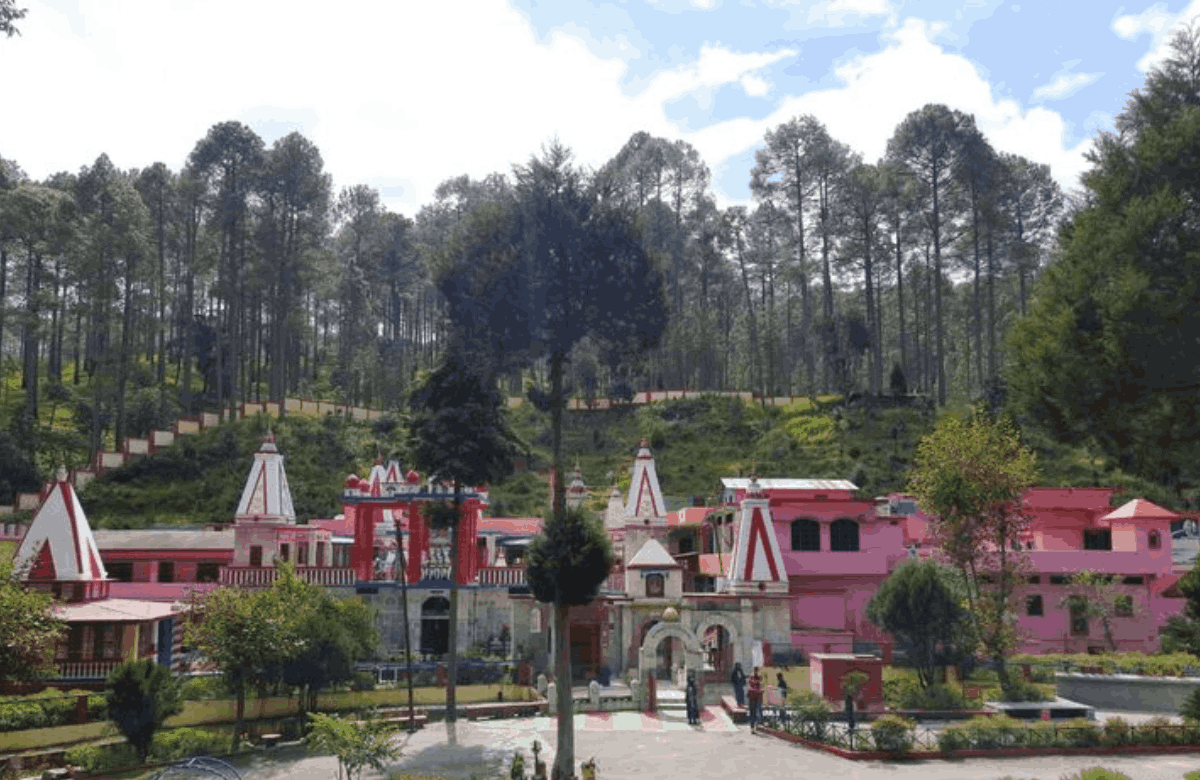
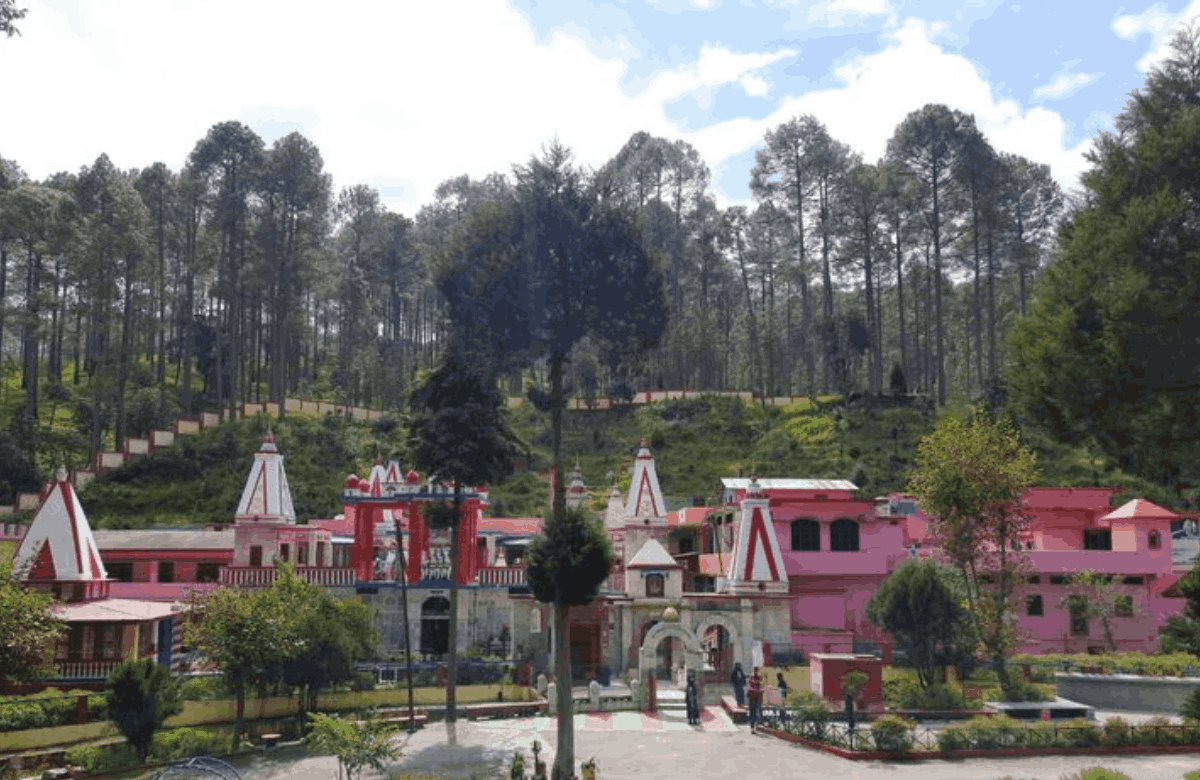
Several travel guides place a Binsar Mahadev temple approximately 18–20 km from Ranikhet. The route is described as a scenic drive towards Sauni/Bisaona. The Swargashram Binsar Mahadev Mandir is described as a temple complex surrounded by trees, with mountain views and idols of Shiva, Ganesh, Radhe Krishn, Kaali Maa and Dattatrey. This destination is suitable for travellers who are already exploring Ranikhet and want to add a nearby temple visit.
Ancient Binsar Mahadev in Pauri Garhwal
The Pauri district website places the ancient Binsar Mahadev Temple at approximately 2,480 metres in a forest of birch, rhododendron and deodar. According to that source, the last motorable road ends at Thalisain, after which visitors must continue on foot. A trekking account describes a walk of approximately 2 hours and 45 minutes from Pidhsain, although other sources describe different trailheads and distances. Because the published routes do not fully agree, ask locally which trail is currently open and how long the walk will take.
Binsar Mahadev and Almora
Almora is often associated with Binsar because of the nearby Binsar Wildlife Sanctuary. Some travel guides also refer to a Bineshwar or Bindeshwar Mahadev temple in or near the sanctuary area. However, the sanctuary is a separate attraction with its own entry arrangements and timings. Do not assume that a booking or route for the sanctuary will take you to the temple you want.
How to Avoid Confusion
Before leaving, follow these steps:
Tell your driver the village or destination name.
For the Ranikhet-side temple, confirm Sauni/Bisaona.
For the ancient Pauri temple, confirm Thalisain and the relevant trailhead.
If you want Zero Point and forest trails, ask specifically for Binsar Wildlife Sanctuary.
Check the route with a local host, especially if online listings show conflicting distances.
Binsar Mahadev Story: The Pandavas, King Bindu and Local Legends
There is no single universally established story explaining the origin of Binsar Mahadev Temple. Local traditions and travel sources describe several legends, and their details differ.
The Pandava Legend
One of the most popular stories says that the five Pandava brothers built the temple during their exile in a single night. Another version says that they built it in one day. Some local accounts specifically associate Bhima with the construction of the temple during the Pandavas' journey through the Himalayas. A village tradition also connects the area with the Pandavas' journey towards the Himalayas during their twelve-year exile. A large rock known as Brahm Dhungi, approximately 2 km uphill according to one account, is said to have been left by Bhima. These accounts are part of local religious tradition rather than a conclusively established historical record.
King Bindu and King Prithu
Another story credits King Prithu with building the temple in memory of his father, King Bindu. According to this tradition, the name Bindeshwar comes from Bindu, while the name Binsar developed over time from Bindeshwar Mahadev. This account appears in both district and travel sources, although the historical details are not consistently documented.
The Legend of Vishwakarma
Some sources suggest that Vishwakarma, the divine architect in Hindu tradition, may have built the temple. One account also refers to an unusual symbol outside the temple that is believed by some to represent Vishwakarma's writing. This is another religious legend associated with the temple's origins.
The Story of Nandi
A village tale describes Nandi, the bull associated with Lord Shiva, as a guardian of the temple. According to the story, Nandi grazed in a field belonging to villagers from Patwal. After villagers injured the bull, they regretted their actions and began worshipping a black idol associated with him. The story is preserved as a local tradition and adds to the temple's folklore.
What Does Binsar Mean?
The sources offer different explanations of the name. One trekking account interprets Binsar as a place without pain or suffering, while another suggests that the village took its name from the temple. The available accounts do not conclusively settle the origin of the name.
Vaikuntha Chaturdashi and the Lamp Tradition
Vaikuntha Chaturdashi is associated with an annual fair at the ancient temple. A particularly notable tradition involves women standing through the night with lamps in their hands while praying for the blessing of a child. The district website describes this overnight vigil as part of the temple's religious significance. The festival's date should be confirmed using a current Hindu calendar because sources differ on when it is observed.
The Five Springs
A trekking account describes five cold springs in the temple area, known as vasudhara. According to this account, three springs are traditionally used by men and two by women. Bathing in the springs before darshan is described as a local practice. Visitors should follow the instructions of temple authorities and local residents.
History and Architecture of Binsar Mahadev Mandir
The exact construction date of Binsar Mahadev Temple remains uncertain. The sources consulted provide different dates and different accounts of who built it. There is no single documented construction history that resolves these differences.
Who Built Binsar Mahadev Temple, and When?
| Source | Attributed Builder | Date or Period |
|---|---|---|
| Wikipedia | Maharaja Prithu, in memory of his father Bindu | 9th or 10th century |
| Trawell | King Pithu, in memory of his father Bindu | 10th century |
| Pauri district website | Maharaja Prithu, in memory of his father Bindu | No date specified |
| Outlook Traveller | King Kalyan Chand of the Chand dynasty | 9th century |
| Chirping Hills Resort | King Kalyan Chand of the Chand dynasty | 9th century |
| Sacred Yatra | Kalyan Chand or Maharaja Prithu | Various periods are suggested |
These accounts do not agree, and some proposed dates conflict with the chronology of the dynasties mentioned. It is therefore better to describe the temple as an old religious site whose precise construction date remains uncertain.
One travel source reports that an image of Mahishasuramardini carries Nagari inscriptions dating to as early as the 9th century. Another says that the Archaeological Survey of India has studied the site.
Architecture of the Temple
Different sources describe the temple's architecture using terms such as Katyuri, Nagara and Haimvat styles. Some describe a combination of architectural influences.
Features mentioned in the source material include:
Stone construction: The temple is described as a stone structure with carved religious figures and shrines.
Shiva lingas: Several accounts mention Shiva lingas in the temple area.
Sanctum: Shiva and Parvati are associated with the central chamber, along with figures such as Ganesh and Mahishasuramardini.
Courtyard: A trekking account describes a Shivling, a large Nandi and a cave dedicated to Bhairav Nath.
Natural water: Sources describe cold water or a natural spring associated with the shrine.
The exact architectural details visible today should be confirmed locally, as the source material also mentions damage and rebuilding.
Damage and Rebuilding
One source says that local priests attribute damage to idols on the front wall to a period of Nepalese rule over Garhwal. Another describes the original structure as having been demolished before a new structure was built. These claims are not consistently confirmed by the other sources used in the guide. Visitors interested in the temple's current structure should check recent local information before travelling.
Swargashram Binsar Mahadev Mandir
Swargashram Binsar Mahadev Mandir is described by travel listings as a temple complex at Sauni/Bisaona, approximately 18 km from Ranikhet.
The complex is associated with several Hindu deities, including:
Lord Shiva
Lord Ganesh
Radhe Krishn
Kaali Maa
Dattatrey
Travel listings also mention surrounding deodar trees and mountain views. The available sources used for this guide do not establish a reliable founding date or a complete historical account for this particular complex.
If you plan to visit from Ranikhet, confirm the location directly with your driver or accommodation provider so that you do not confuse it with the ancient temple in Pauri Garhwal or Binsar Wildlife Sanctuary near Almora.
What Is Binsar Famous For? Wildlife, Zero Point and Himalayan Views
Binsar is widely known for its wildlife sanctuary, forest trails and panoramic Himalayan scenery. The sanctuary near Almora is a different destination from the Binsar Mahadev temples, although travellers often combine regional attractions during a longer Uttarakhand trip.
Binsar Wildlife Sanctuary at a Glance
| Feature | Information |
|---|---|
| Location | Near Almora, Uttarakhand |
| Elevation | Approximately 2,412–2,420 metres in the Jhandi Dhar hills |
| Area | Approximately 45.59 square kilometres, according to Wikipedia |
| Established | 1988 |
| Historical Association | Former summer capital of the Chand kings |
| Wildlife | More than 200 bird species are reported, along with mammals such as leopard, Himalayan goral and musk deer |
| Main Viewpoint | Zero Point, also called Jhandi Dhaar |
| Mountain Views | Peaks such as Trisul, Nanda Devi, Nanda Kot and Panchachuli may be visible on clear days |
Zero Point: A Panoramic Himalayan Viewpoint
Zero Point, also known as Jhandi Dhaar, is described as the highest point within Binsar Wildlife Sanctuary. One travel guide places it approximately 2 km from the KMVN Tourist Rest House, with the route passing through forest. The viewpoint is popular for sunrise, sunset and panoramic Himalayan views. It can become busy during popular travel periods, so allow time for the walk.
A travel source suggests reaching the viewpoint by around 3 PM for golden-hour light. This is a planning suggestion, not a fixed requirement.
Wildlife and Forests
Binsar Wildlife Sanctuary protects forest landscapes that include oak, rhododendron and deodar. Sources mention mammals such as leopard, Himalayan goral, chital and musk deer. Birdwatchers may also look for species such as the Himalayan monal and koklass pheasant. Wildlife sightings are never guaranteed. Visitors should remain quiet, follow sanctuary rules and avoid disturbing animals.
Other Places to Visit Near Binsar
The wider Binsar and Almora region includes several attractions:
Binsar Sanctuary Museum: A museum described as displaying endangered birds, reptiles and butterflies.
Pariyadeva Pashan: A megalithic archaeological site on the Almora–Binsar road.
Kasar Devi Temple: A well-known temple in the Almora region.
Katarmal Sun Temple: A historic temple that can be included in a regional itinerary.
Jageshwar Temple Complex: A group of temples in the wider Kumaon region.
Distances and travel times vary by route. Plan these as separate stops rather than assuming that all are close to the Binsar Mahadev temple.
Is Binsar Wildlife Sanctuary the Same as Binsar Mahadev?
No. Binsar Wildlife Sanctuary is a forest and wildlife destination near Almora. Binsar Mahadev refers to Shiva temples described in different locations. Some travel guides mention a Bineshwar Mahadev temple in or near the sanctuary, but this does not make the sanctuary and the ancient Pauri temple the same place. Confirm the exact destination before booking accommodation or transport.
How to Reach Binsar Mahadev from Ranikhet, Almora and Kathgodam
The route depends on which destination you want to visit. The Ranikhet-side temple is described as a relatively short road journey. The ancient temple in Pauri Garhwal requires a final walk or trek. Binsar Wildlife Sanctuary is reached by road from the Almora area.
Distances at a Glance
| Starting Point | Destination | Approximate Distance | Notes |
|---|---|---|---|
| Ranikhet | Binsar Mahadev at Sauni/Bisaona | 18–20 km | Approximately 38 minutes by road in one source |
| Kathgodam | Ranikhet | 126 km | Kathgodam is a commonly used railway station |
| Pantnagar Airport | Ranikhet / Almora | Approximately 125 km / 127 km | Figures reported by one travel source |
| Pauri | Ancient Binsar Mahadev Temple | Approximately 114 km | The last motorable point is reported as Thalisain, 96 km from Pauri |
| Almora | Binsar Wildlife Sanctuary | Approximately 24–33 km | Sources differ |
| Kathgodam | Binsar Wildlife Sanctuary | Approximately 105–119 km | Sources differ |
These are approximate distances from the cited sources. Confirm your route and travel time with a local driver before departure.
How to Reach Binsar Mahadev from Ranikhet
For the Ranikhet-side temple, travel towards Sauni/Bisaona. Travel guides place the temple approximately 18–20 km from Ranikhet, with one source describing a drive of around 38 minutes. The route is described as scenic, but facilities near the temple may be limited. Food stalls and restrooms are not guaranteed, so plan accordingly.
During heavy rain, roads can become slippery and may be affected by landslides.
How to Reach by Train
Kathgodam is the railway station commonly used by visitors travelling to Ranikhet, Almora and the wider Kumaon region. From Kathgodam, continue by taxi or available bus services. One travel source reports shared taxis and UTC buses between Kathgodam and Almora at approximately ₹200–₹300, but fares and schedules can change. From Almora or Ranikhet, arrange local transport to the exact temple location you have confirmed.
How to Reach by Air
Pantnagar is the airport commonly used for travel to the region. From the airport, continue by road towards Ranikhet, Almora or your chosen destination. Travel distances differ depending on the route, so check the journey with your transport provider before booking.
How to Reach the Ancient Binsar Mahadev Temple in Pauri Garhwal
The ancient temple requires more careful planning because the final stretch is described as a walking route. The source material mentions several possible starting points:
Thalisain: The Pauri district website identifies this as the last motorable point.
Pidhsain: One trekking account describes a walk of approximately 2 hours and 45 minutes.
Chounda village: Another source gives approximately 6 km of steep climbing.
Peersain: One trekking account gives approximately 9 km from this area.
These descriptions do not fully agree. Ask at Thalisain or the nearest local settlement which route is open and how long the walk is likely to take. Accommodation near the ancient temple is limited. The Pauri district website lists a Forest Rest House, a PWD Rest House and a dharamshala.
How to Reach Binsar Wildlife Sanctuary from Almora
Binsar Wildlife Sanctuary is reached by road from Almora. One source reports local taxi fares of approximately ₹800–₹1,200 from Almora. These prices are indicative and may change. Visitors travelling from Delhi can first reach Almora by road and then arrange local transport to the sanctuary. Check current road access and gate timings before setting out.
Binsar Mahadev Mandir Timings, Darshan, Stay and Booking
The source material does not identify a separate online darshan booking system for Binsar Mahadev Temple. It reports that temple entry is free, while accommodation and sanctuary visits may involve separate arrangements or charges.
Binsar Mahadev Mandir Timings
One travel listing gives timings of 7:00 AM to 7:00 PM for the Ranikhet-listed temple. Other sources do not provide a consistent schedule. Some recommend early morning or late evening for a quieter darshan and mention morning and evening aarti. Confirm the current opening hours locally, especially during winter and festival periods.
Darshan and Entry Fee
The source material says that temple darshan is free and does not identify an official online booking system. This should not be confused with the entry arrangements for Binsar Wildlife Sanctuary, which has a separate gate and reported entry fees.
Festivals at Binsar Mahadev
The main festivals mentioned in the source material are:
Vaikuntha Chaturdashi: Associated with an annual fair and an overnight lamp-worship tradition.
Maha Shivaratri: Described by one source as a major festival at the temple.
Shravan: The Hindu month of Shravan is described by one source as a sacred period for worship.
Sources differ on the date of the Vaikuntha Chaturdashi fair. Check a current Hindu calendar and confirm arrangements locally before planning a festival visit.
Binsar Booking Steps
Choose the correct destination. Decide between the Ranikhet-side temple, the ancient Pauri temple and Binsar Wildlife Sanctuary.
Book accommodation if required. Reserve your preferred property early during busy travel periods.
Confirm the route. For the Pauri temple, ask about the last motorable point and current trekking trail.
Check sanctuary charges separately. Sanctuary entry is different from temple darshan.
Confirm opening hours. Ask about local timings, especially if visiting early, late or during a festival.
Verify all prices. Room rates, transport fares, guide charges and entry fees may change.
Binsar Wildlife Sanctuary Entry Fees
The source material cites the following sanctuary fees from a 2025 travel guide:
| Item | Reported Fee |
|---|---|
| Entry per person | ₹150 |
| Entry per vehicle | ₹250 |
| Guide for a short jungle walk | Approximately ₹300 |
These are historical figures reported by the source, not verified current fees. Confirm the latest rates and entry rules at the official sanctuary gate before travelling.
One trip report also mentions a 6:00 PM entry cutoff. Check the current gate timing rather than relying on this historical report.
Best Time to Visit Binsar Mahadev, Nearby Places and a Simple Itinerary
The best time to visit depends on your destination and whether you want a temple visit, a forest walk or mountain views.
One source recommends October to May as a favourable period for Binsar Mahadev. Another says the temple can be visited throughout the year but advises avoiding heavy rain.
Best Time to Visit by Season
| Season | What to Expect | Travel Advice |
|---|---|---|
| March to June | Pleasant weather; one source reports approximately 15–30°C at Binsar for April to June | A popular period for sightseeing |
| July to September | Lush forests and rainy conditions | Roads may be slippery and landslide-prone |
| October to November | Clear skies; one source reports approximately 5–20°C at Binsar | A favourable period for mountain views |
| December to February | Cold weather and occasional snow | Carry warm clothing and check road conditions |
These figures are broad seasonal indications from travel sources, not a forecast for your travel dates.
Practical Tips for Visiting Binsar Mahadev
A little preparation can make your visit easier, especially if you are travelling with family or planning to reach the ancient temple on foot.
Tips for Temple Visitors
Confirm the destination first. Tell your driver whether you want the Sauni/Bisaona temple, the ancient Pauri temple or Binsar Wildlife Sanctuary.
Arrive early when possible. Early morning or weekdays may offer a quieter experience.
Carry water and snacks. Shops, food stalls and restrooms may be limited near some temple locations.
Dress modestly. Wear respectful clothing suitable for a religious site.
Avoid heavy rain for trekking. Roads and trails can become slippery during the monsoon.
Ask about a local guide. A knowledgeable local guide can help explain the history and route.
Check festival dates. Vaikuntha Chaturdashi may attract additional visitors.
Follow temple guidance. Respect local practices, priests' instructions and any restrictions.
Final Thoughts: Plan Your Binsar Mahadev Visit
Binsar Mahadev is a rewarding destination for travellers interested in Hindu traditions, local legends, forest landscapes and the history of Uttarakhand. However, planning the visit begins with one important step: choosing the correct destination. The ancient temple in Pauri Garhwal, the temple complex near Ranikhet and Binsar Wildlife Sanctuary near Almora should not be treated as the same place. Confirm the location, plan the route, check current timings and accommodation availability, and prepare for the weather. If your destination requires a trek, arrange suitable footwear, water, food and local guidance.
The stories associated with Binsar Mahadev—from the Pandavas and King Bindu to the tradition of overnight lamps during Vaikuntha Chaturdashi—make it a meaningful destination for spiritual travellers. With a little preparation, you can enjoy the visit while respecting the temple and its surrounding forest.