

- India Travelogue
- Chandan_singh
Deep in the forested Sahyadri hills of western Maharashtra, where the Western Ghats rise to over 1,000 metres and mist clings to the treetops long after sunrise, sits one of India's twelve holiest Shiva temples. Bhimashankar Jyotirlinga is not just a pilgrimage destination — it is an immersion. An immersion in ancient mythology, extraordinary biodiversity, and the quiet power of a temple that has stood in this forest for centuries. Yet for all its significance — the 8th Jyotirlinga, one of three in Maharashtra, the source of the Bhima River, the home of the Giant Indian Squirrel — Bhimashankar is surprisingly poorly documented online. Searches for 'bhimashankar jyotirlinga location,' 'bhimashankar temple timing,' or 'how to reach bhimashankar from Pune' return scattered and incomplete information that leaves pilgrims and travellers planning blind. This guide changes that. Everything you need to know about Bhimashankar Jyotirlinga — its location and geography, the full history and mythology, what to see inside the temple complex, darshan timings, how to reach from Pune and Mumbai, cab fares, the wildlife sanctuary, trekking options, and a complete travel itinerary — is right here.
Bhimashankar Jyotirlinga Location: Where Is It Exactly?
Bhimashankar Jyotirlinga is located in the Bhimashankar Wildlife Sanctuary — a protected forest reserve in the Sahyadri (Western Ghats) mountain range, in the Khed taluka of Pune district, Maharashtra. The temple is accessible from the village of Bhimashankar, which sits deep within the sanctuary at an elevation of approximately 1,050 m (3,445 ft) above sea level. The location is deliberately remote. The Sahyadri hills form the rugged western backbone of the Deccan plateau, and Bhimashankar sits at one of their highest accessible points — where the Western Ghats biodiversity hotspot meets the sacred geography of the Jyotirlinga tradition. The nearest major city is Pune, approximately 110 km to the south-east.
Key Location Details
- State: Maharashtra, India
- District: Pune (Khed Taluka)
- Nearest Railway Station: Karjat (~55 km) or Pune Junction (~110 km)
- Nearest Airport: Pune International Airport (~130 km)
- Distance from Pune: ~110 km (2.5–3 hours by road)
- Distance from Mumbai: ~200 km (4 hours by road)
- Distance from Nashik: ~185 km (3.5–4 hours)
- Altitude: 1,050 m (3,445 ft) above sea level
- River Origin: Bhima River originates here — flows east through Solapur and Bijapur before joining Krishna
- Forest Type: Semi-evergreen and evergreen Sahyadri forest — part of Western Ghats UNESCO World Heritage Site
Bhimashankar Jyotirlinga History and Mythology
The history of Bhimashankar Jyotirlinga is woven from two distinct threads: the cosmic mythology recorded in the Shiva Purana, and the architectural and cultural history of the temple itself spanning over a thousand years.
The Sacred Mythology: How Bhimashankar Came to Be
The story of Bhimashankar's origin is one of the most dramatic in the entire Jyotirlinga canon — involving a demon born of the Ramayana's most fearsome warrior, a cosmic battle in the Sahyadri hills, and the earth itself crying out for divine intervention. According to the Shiva Purana, Bhima was the son of Kumbhakarna — the giant demon brother of Ravana from the Ramayana — and a woman named Karkati. Bhima grew up without knowing his father's identity. When he learned that his father Kumbhakarna had been killed by Lord Rama at Lanka, he was consumed by grief and vengeance. Determined to avenge his father's death, Bhima undertook severe penance to Lord Brahma and received extraordinary powers — including the boon of invincibility against most weapons. Armed with these powers, Bhima unleashed terror on the three worlds. He defeated the gods, imprisoned great sages, attacked the devotees of Lord Vishnu and Shiva, and even imprisoned King Sudakshina — a devout Shiva worshipper — preventing him from performing his daily Shiva puja. Sudakshina continued his worship even in chains, creating a small Shiva linga from sand and praying with absolute devotion. This unshakeable devotion in the face of demonic oppression moved Lord Shiva to intervene.
Lord Shiva manifested at this location in the Sahyadri hills and engaged the demon Bhima in direct combat. The battle was fierce — but Shiva, with a mere gaze, reduced the demon to ashes. After the battle, the gods and sages gathered and implored Lord Shiva to remain permanently at this location so that devotees could worship him for all time. Shiva agreed and manifested as the Bhimashankar Jyotirlinga. Ancient texts also record that the sweat that flowed from Lord Shiva's body during the battle collected and flowed from this hilltop — becoming the Bhima River, which continues to flow from the Sahyadri hills eastward across Maharashtra and Karnataka to merge with the Krishna River. This mythological origin of the river is one of the reasons Bhimashankar is considered among the most powerful of the 12 Jyotirlingas.
Historical Background of the Temple
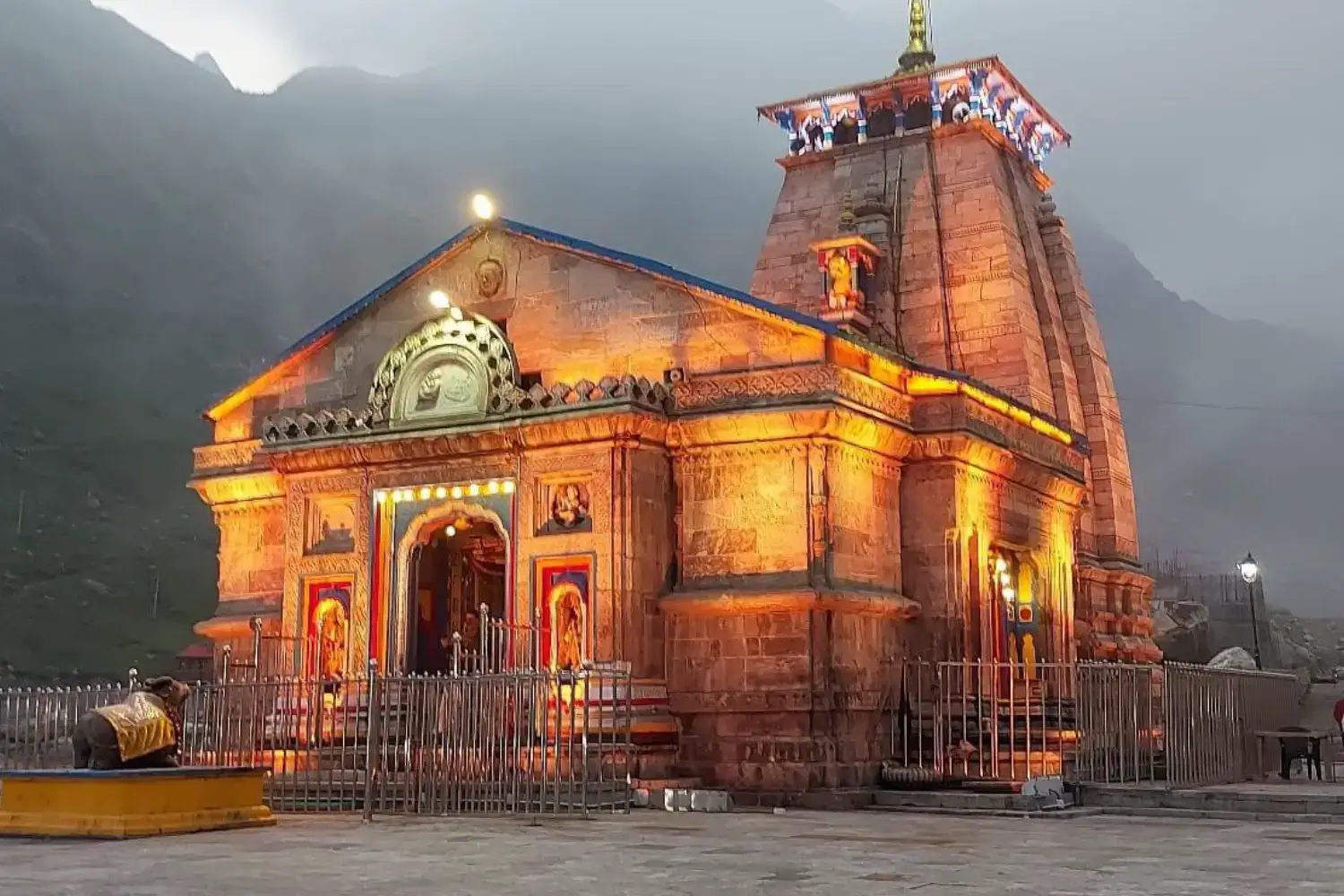
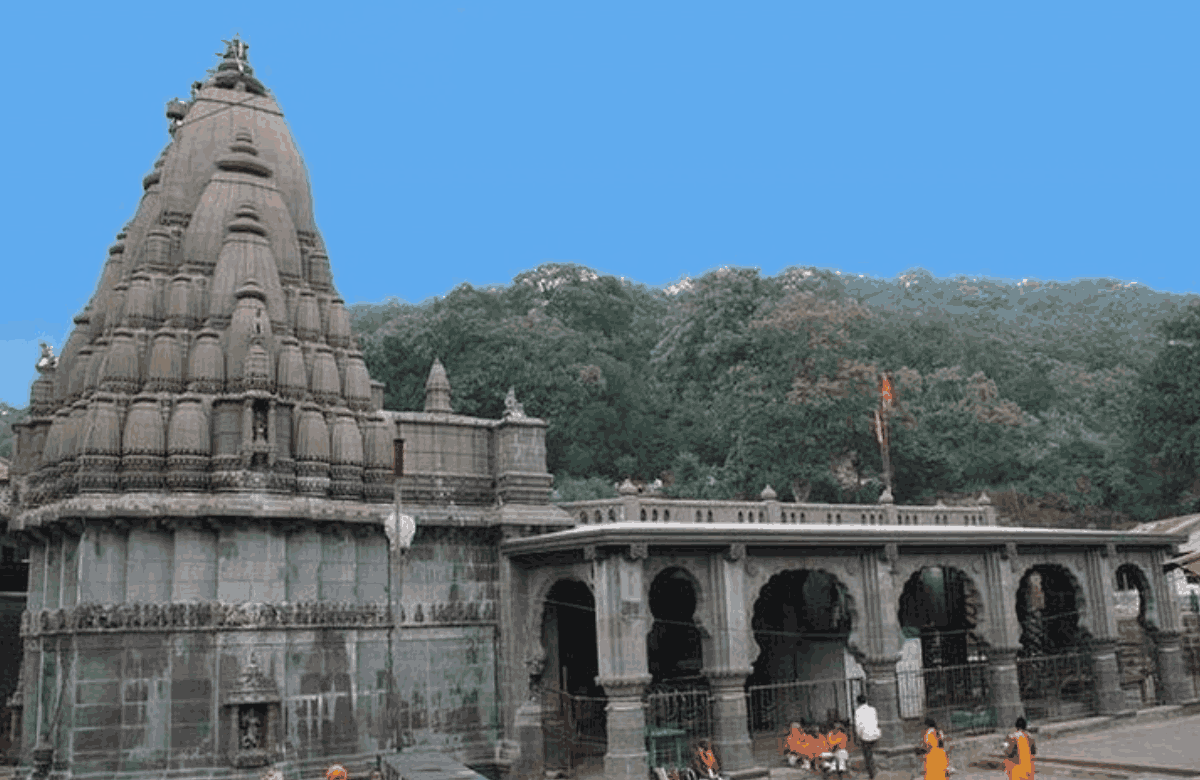
The physical history of the Bhimashankar temple structure is less precisely documented than its mythology, but archaeological evidence and architectural analysis suggest the existence of a sacred shrine at this location dating back to at least the 7th–8th century CE. The architectural style of the surviving temple is classified as Hemadpanthi — a school of stone temple construction associated with Hemadpant, the minister of the Yadava king Ramdevarao (13th century CE). Hemadpanthi temples are built entirely from black basalt stone without the use of lime or mortar — relying instead on the precise interlocking of stone blocks. The temple's tall single shikhara (tower) with its intricate carved surface is characteristic of this style.
The Maratha king Nana Phadnavis (1742–1800 CE) — the brilliant administrator of the Peshwa court — is credited with significant renovation and patronage of the Bhimashankar Temple in the 18th century. The Shiva Sabha Mandapa (the large prayer hall adjacent to the main sanctum) was added during this Maratha period. The British colonial Survey of India documented the temple complex in the 19th century, and the Archaeological Survey of India (ASI) has since classified it as a site of national archaeological importance.
Bhimashankar Jyotirlinga Temple: Architecture & What to See
The Bhimashankar Jyotirlinga temple complex is compact compared to some of the larger pilgrimage sites in India, but what it lacks in scale it more than compensates for in atmosphere and spiritual intensity. The combination of dense forest, mountain mist, ancient stone, and the raw energy of the Sahyadri Ghats creates an experience unlike any other Jyotirlinga.
The Main Jyotirlinga Sanctum
The innermost sanctum (garbhagriha) of Bhimashankar Temple houses the swayambhu (self-manifested) Jyotirlinga — a naturally occurring Shivalinga that is believed to have always existed at this location. The linga is black granite, larger than most Jyotirlinga shrines, and is always moist — fed by a natural spring that flows from within the Sahyadri rock. The sanctum is intentionally small and intimate, creating the feeling of standing in direct presence of the deity.
The Hemadpanthi Architecture
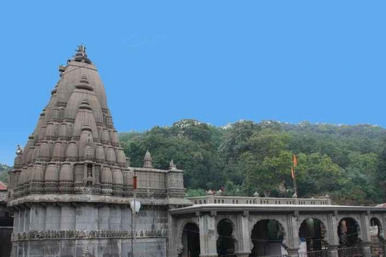
The main temple shikhara (tower) is the visual centrepiece of Bhimashankar — a single tall stone tower with elaborate carved surfaces featuring Shiva in multiple iconographic forms, supporting deities, celestial beings, and geometric ornamental patterns. The black basalt stone takes on different colours throughout the day — darkening with moisture in the morning mist and brightening in direct sunlight in the afternoon. The craftsmanship of the 13th-century carving remains remarkably well-preserved.
The Shiva Sabha Mandapa
The large assembly hall (mandapa) added during the Maratha era features a colonnaded design with wide open sides that allow the cool forest air to flow through the space. This is where devotees gather for collective aarti and puja. The mandapa also houses subsidiary shrines to Nandi (Shiva's sacred bull), Ganesha, and Parvati.
Bhima River Origin Point
One of the most unique aspects of the Bhimashankar temple complex is the proximity to the origin of the Bhima River. A small stream visible near the temple is considered the traditional source — the point where the river begins its 861 km journey eastward. Pilgrims who make a special point of visiting this source experience the spiritual satisfaction of standing at the origin of one of the Deccan's most important rivers.
Temple Darshan Timings
Bhimashankar Jyotirlinga Temple Darshan Timings:
- Temple opens: 4:30 AM daily
- Kakad Aarti (dawn aarti): 4:30 AM – 5:30 AM
- Morning darshan: 5:30 AM – 12:00 PM
- Afternoon closure: 12:00 PM – 4:00 PM
- Evening darshan: 4:00 PM – 9:00 PM
- Shej Aarti (final aarti): 9:00 PM – 9:30 PM
- Temple closes: 9:30 PM
Note: Timings may vary during Mahashivratri, Shravan month, and major festivals when the temple remains open for extended hours. Always verify current timings with the temple trust before planning your visit.
How to Reach Bhimashankar Jyotirlinga from Pune
The most common starting point for Bhimashankar is Pune — 110 km to the south-east. The road journey passes through the Deccan plateau town of Rajgurunagar and then climbs into the Sahyadri Ghats through dense forest. The final 25–30 km from Rajgurunagar into the sanctuary is a winding mountain road requiring careful driving.
By Road from Pune (Recommended)
The route from Pune to Bhimashankar follows the Pune-Nashik Highway (NH 61) to Rajgurunagar (Khed), then turns onto the Bhimashankar State Highway into the Ghats. The road is well-signed and paved, though it narrows significantly above Rajgurunagar.
- Pune (starting point) 0 km | Start Depart from central Pune heading north on NH 61 (Mumbai-Nashik Expressway direction). Morning departures before 8:00 AM avoid Pune city traffic and arrive at Bhimashankar before the mid-morning temple crowds.
- Rajgurunagar / Khed ~60 km | ~1 hr Pass through Chakan and Rajgurunagar. Turn left at the Bhimashankar road junction in Rajgurunagar (well-signed). This is the last town with reliable petrol stations, ATMs, and medical facilities before the sanctuary. Stop here to refuel and stock up on water and snacks.
- Ghat Road — Forest Entry ~85 km | ~1 hr 40 mins The road enters the Bhimashankar Wildlife Sanctuary. Speed drops significantly here — winding forest road, one-lane sections, and wildlife crossing warnings. Drive slowly and watch for animals. The forest becomes progressively denser as you climb. Forest checkpost — carry valid ID for all passengers.
- Bhimashankar Village & Temple ~110 km | ~2.5 – 3 hrs Arrive at Bhimashankar village and temple parking. Leave your vehicle at the designated parking area (nominal fee). Walk up the stone steps to the temple complex — approximately 5–7 minutes on foot. The temple is open from 4:30 AM to 9:30 PM.
Bhimashankar Trekking Routes: For Those Who Want to Earn the Darshan
Bhimashankar is one of Maharashtra's most popular trekking destinations — and for many devotees and adventure enthusiasts, trekking to the temple is the most meaningful way to make the pilgrimage. Several trail options exist, varying in difficulty and duration.
Shidi Ghat Trail (Most Popular Trek)
The Shidi Ghat (Ladder Ghat) trail is the most direct and most popular trekking route to Bhimashankar. The trail begins from Khandas village at the base of the Ghats and ascends steeply through dense forest to the temple. Distance: approximately 12 km one way. Duration: 4–5 hours ascending, 3–4 hours descending. Difficulty: Moderate to Challenging — the name 'Shidi' (ladder) refers to a near-vertical rock section near the top that requires careful hand-over-foot climbing. This section has iron pegs and holds but demands reasonable fitness and no fear of heights.
Ganesh Ghat Trail
The Ganesh Ghat trail approaches Bhimashankar from the Ganesh Ghat village side — a slightly longer but gentler alternative to Shidi Ghat. Distance: approximately 14–15 km one way. Duration: 5–6 hours ascending. Difficulty: Moderate — less technical than Shidi Ghat with no vertical scrambling required. This trail passes through some of the most pristine sections of the wildlife sanctuary and offers the best chances of wildlife sightings.
Trekking Tips for Bhimashankar
- Start early: Begin the trek by 6:00–7:00 AM. The ascent takes 4–6 hours and afternoon heat makes the climb uncomfortable. Starting early also maximises wildlife sighting opportunities.
- Carry sufficient water: No reliable water sources exist on the Shidi Ghat trail until you reach the temple. Carry at least 2–3 litres per person.
- Hire a local guide: The trails have multiple forks and can be confusing in sections. Local guidesfrom Khandas village are available for ■400–■600 per day and dramatically improve your wildlife spotting chances.
- Best trekking season: October–February for clear views and pleasant temperatures. Post-monsoon (September–October) gives lush green forest but slippery trail sections.
- Trek + Temple combination: Many trekkers ascend via Shidi Ghat, attend darshan, stay overnight in Bhimashankar, and descend via Ganesh Ghat the next morning for a complete Bhimashankar experience
Final Thoughts: Where the Forest and the Divine Are One
Bhimashankar Jyotirlinga is not merely a temple in a forest. It is a forest that has become a temple — where the divine presence of Lord Shiva and the living presence of the Sahyadri's extraordinary ecosystem coexist in a way that transforms every visitor, whether they come as a pilgrim, a trekker, or a naturalist. The sweat of Lord Shiva becomes the Bhima River flowing across the Deccan. The demon's ashes nourish the forest floor. The Giant Indian Squirrel leaps between Ain trees above the same stones that medieval artisans carved in the 13th century. The Kakad Aarti echoes through the mist at 4:30 AM. This is Bhimashankar — layered, alive, ancient, and utterly unlike anywhere else. Drive up from Pune on a weekday morning. Arrive before dawn if you can. Let the Kakad Aarti wash over you in the dark. Walk the parikrama path in the early light, watch for the Giant Squirrel in the canopy, stand at the source of the Bhima River, and understand — perhaps for the first time — why this forested hilltop has drawn pilgrims for fifteen hundred years.