

- India Travelogue
- @Nagarjuna_Travels
You arrive at Omkareshwar, cross the bridge over the sacred Narmada, and step onto Mandhata Island. The five-storey temple rises before you, carved stone towers reaching toward the sky. You feel the weight of centuries. Something ancient is present here — something that existed long before the current temple walls were built, long before history was written down. Yet for most visitors, the history of Omkareshwar Temple remains a mystery. When was it built? Who built it? Why does this island hold such extraordinary sanctity? What events — both glorious and devastating — shaped the temple into what it is today? Most travel guides skip these questions entirely and move straight to darshan timings. This guide does not. Here is the complete, authoritative history of Omkareshwar Temple — from its cosmic origins in Puranic mythology, through the medieval dynasties that built and patronised it, the philosophical revolution of Adi Shankaracharya, the Maratha era of renewal, and its present form as one of India's most visited Jyotirlinga pilgrimage sites. By the time you finish reading, the stones of Omkareshwar will speak to you.
Omkareshwar Temple: Historical Quick Facts
| Omkareshwar Temple | Shri Omkareshwar Jyotirlinga Temple |
| Island Name | Mandhata / Shivapuri / Omkareshwar |
| Named After | King Mandhata of the Ikshvaku (Solar) Dynasty |
| Earliest Textual Reference | Shiva Purana & Skanda Purana (composed 3rd–10th century CE) |
| Jyotirlinga Number | 4th among the 12 Jyotirlingas of Lord Shiva |
| Dynasty Responsible for Current Structure | Paramara Dynasty (9th–14th century CE) |
| Notable Historical Visitor | Adi Shankaracharya (8th century CE) — received diksha here |
| Maratha Patronage | Peshwas and Holkar dynasty (18th century CE) |
| Architectural Style | North Indian Nagara style with Bhumija sub-style elements |
| UNESCO Status | Not yet listed — under consideration for India's tentative list |
| Modern Impact | Omkareshwar Dam (2007) altered river levels around the island |
Omkareshwar Temple History: Era by Era
The history of Omkareshwar Temple unfolds across six distinct historical eras — each leaving its mark on the island's sacred landscape, its temples, and its place in the Indian spiritual tradition.
PRE-HISTORIC & VEDIC ERA The Sacred Island Before History Before 3000 BCE
The sanctity of Mandhata Island predates written history. The Narmada River — one of India's seven sacred rivers (Sapta Sindhu) — has been a centre of spiritual activity since the Paleolithic era. Archaeological findings along the Narmada valley, including the discovery of Narmada Man (Homo erectus fossils dating to 500,000 BCE), confirm that this river basin was among the earliest inhabited regions of the Indian subcontinent. The island's unusual Om shape was understood by ancient communities to be a divine sign. Ancient Vedic texts reference the Narmada as a river that purifies simply by sight — unlike other sacred rivers which require bathing. The tradition of Narmada Parikrama — circumambulating the entire 2,600 km length of the Narmada river on foot — is one of Hinduism's oldest pilgrimage traditions and has its spiritual heart at Omkareshwar.
PURANIC & MY THOLOGICAL ERA King Mandhata and the Manifestation of the Jyotirlinga 3000 BCE – 500 CE
The Omkareshwar Temple history is inseparable from the story of King Mandhata — a legendary monarch of the ancient Ikshvaku (Solar) dynasty, also mentioned in the Ramayana and Mahabharata. According to the Shiva Purana, King Mandhata performed intense penance (tapasya) on this very island in the Narmada for countless ages, worshipping Lord Shiva with unwavering devotion. Pleased by this penance, Lord Shiva appeared on the island — manifesting as the self-originated (swayambhu) Omkareshwar Jyotirlinga. The island has been called Mandhata ever since. A parallel Puranic account narrates the story of the Vindhya mountain range. The Vindhyas — feeling humiliated that they were not as tall as Mount Meru — performed penance to Lord Shiva at this spot on the Narmada banks. Shiva appeared and granted them their wish, simultaneously manifesting as the Omkareshwar Jyotirlinga as a permanent divine presence on the island. This account is the one recorded in the Skanda Purana's Reva Khanda — the most detailed ancient source on the Narmada's sacred geography.
EARLY HISTORIC & GUPTA PERIOD Temple Origins and the First Structures 300 BCE – 700 CE
While the exact date of the first temple structure at Omkareshwar is unknown, references in the Gupta-era literature (4th–6th century CE) indicate an established pilgrimage tradition at this site. The Gupta empire — often called India's golden age — was a great patron of Shaivite temple construction across the Narmada valley. Several early stone shrines on Mandhata Island likely date to this period, though none survive intact. Chinese traveller Xuanzang (Hiuen Tsang), who visited India between 629–645 CE, documented thriving Hindu and Buddhist religious centres along the Narmada river. While he did not specifically mention Omkareshwar by its current name, his accounts of the region confirm the religious prominence of the Narmada valley during this era.
ADI SHANKAR ACHARYA ERA The Philosopher's Pilgrimage — A Defining Moment 788 – 820 CE
The most historically significant event in Omkareshwar Temple history occurred in the late 8th century CE — the arrival of a young Shankaracharya at Mandhata Island. Adi Shankaracharya (born 788 CE in Kaladi, Kerala) was one of India's greatest philosophers, theologians, and spiritual reformers. On his journey northward from Kerala, the young Shankara — reportedly in his early teens — arrived at Omkareshwar. Here, on the banks of the Narmada, Shankaracharya encountered Govinda Bhagavatpada — a great sage who meditated in a cave on Mandhata Island. The young Shankara sat at Govinda's feet and received diksha (formal spiritual initiation into sannyasa — the order of renunciation). This initiation transformed Shankara from a wandering student into a sannyasi, launching the philosophical career that would produce the Brahmasutras commentary, the Bhashyas on the Upanishads, and the revival of Advaita Vedanta across India. The cave where this initiation occurred — Govindapada Gufa — still exists on Mandhata Island and is one of the most sacred historical sites on the island, visited by scholars and devotees from across the world. A small temple marks the cave entrance.
PARAMARA DYNASTY ERA The Golden Age of Omkareshwar Temple Architecture 9th – 14th Century CE
The existing temple structures at Omkareshwar were primarily built or extensively developed during the reign of the Paramara dynasty — the dominant Rajput kingdom of the Malwa region (modern Madhya Pradesh) from the 9th to the early 14th century CE. The Paramaras were devout Shaivites and among the most prolific temple builders of medieval central India — responsible for some of the finest temples at Dhar, Mandla, and across the Narmada valley. The Siddhanath Temple — built in the 11th century CE during the Paramara period — is the finest surviving monument of this era on Mandhata Island. Its exterior walls are covered in exceptional sculptural panels depicting Shiva, Parvati, Ganesha, Karttikeya, apsaras (celestial dancers), erotic sculptures (following the Kamasutra-influenced tradition of sacred art), and elaborate floral and geometric patterns in the Bhumija style of Nagara architecture — a regional variant developed in the Malwa and Rajasthan region. The 24 Avatars Temple on the island also dates from this period, as do several smaller shrines along the parikrama path. Art historians consider Omkareshwar's Paramara-era sculpture on par with the more famous Khajuraho temples (also built by a related Chandela dynasty in the same period).
SULTANATE & MUGHAL PERIOD Period of Disruption and Resilience 14th – 17th Century CE
The fall of the Paramara dynasty to the Delhi Sultanate in the early 14th century CE marked the beginning of a turbulent period for Omkareshwar. The Khilji and Tughlaq sultans raided the Malwa region multiple times, and several temples across the Narmada valley suffered damage. Unlike the more exposed temples of Malwa's plains, Omkareshwar's island position — surrounded on all sides by the Narmada — offered some degree of natural protection, and the Jyotirlinga sanctum continued to function. Under the Mandu Sultanate (Malwa Sultanate, 15th century) and later the Mughal empire, the temple experienced varying degrees of tolerance and restriction. Local legends record that during periods of active persecution, the sacred Jyotirlinga was temporarily concealed by priests within the Narmada's waters or in underground chambers to protect it from destruction. This practice of protecting the linga — called 'avagutha' — was common at many Shiva temples during this era.
The Holkar and Peshwa Renaissance 18th Century CE The 18th century
The 18th century CE marks the most significant phase of restoration and patronage in Omkareshwar Temple history. With the rise of the Maratha Confederacy and the collapse of Mughal authority over central India, Hindu temple life revived dramatically across the Narmada valley. The Holkar dynasty — the Maratha rulers of Indore — became the primary patrons of Omkareshwar. Queen Ahilyabai Holkar (1725–1795 CE), who is celebrated across India for restoring hundreds of Hindu temples including Kashi Vishwanath and Somnath, undertook significant renovation work at Omkareshwar during her reign. The Holkars funded the repair of the main Jyotirlinga temple, the construction of ghats along the Narmada, and the establishment of dharamshalas (pilgrim rest houses) on the island. The Peshwas of Pune — the other major Maratha power — also made substantial donations to the temple and sponsored the annual festivals. The Maratha-era additions are visible in the temple's decorative elements and the arrangement of the ghat complex — the characteristic stepped stone riverfront that continues to define Omkareshwar's visual identity along the Narmada.
BRITISH COLONIAL & MODERN ERA Survey, Conservation, and the Dam Controversy 19th Century
Present The Archaeological Survey of India (ASI) — established in 1861 — documented Omkareshwar's temples and sculptures extensively during the late 19th and early 20th centuries. ASI surveys confirmed the Paramara dynasty origins of the major stone temples and classified Omkareshwar as a site of significant national archaeological importance. Post-Independence, the Madhya Pradesh government and the temple trust undertook several restoration projects to maintain the main Jyotirlinga temple and the associated shrines. The most transformative — and controversial — modern event in Omkareshwar's history was the construction and commissioning of the Omkareshwar Dam in 2007. The dam, built across the Narmada River approximately 4 km downstream of Mandhata Island, raised the river's water level significantly. This submerged several ancient ghats and riverside shrines — including portions of the Kedareshwar Cave Temple — that had been accessible during the dry season for centuries. Despite significant protests from environmental groups, archaeologists, and Narmada parikrama pilgrims, the dam was commissioned. Today, the Omkareshwar reservoir's backwaters define the river view from the island. Some submerged structures become visible again during the dry season when reservoir levels drop.
Omkareshwar Temple Architecture: A Historical Analysis
The architecture of Omkareshwar Temple is not the product of a single era or a single patron. It is a layered accumulation of construction, renovation, and addition spanning over a thousand years. Understanding the architecture means reading the history written in stone.
The Main Jyotirlinga Temple — Five-Storey Tower
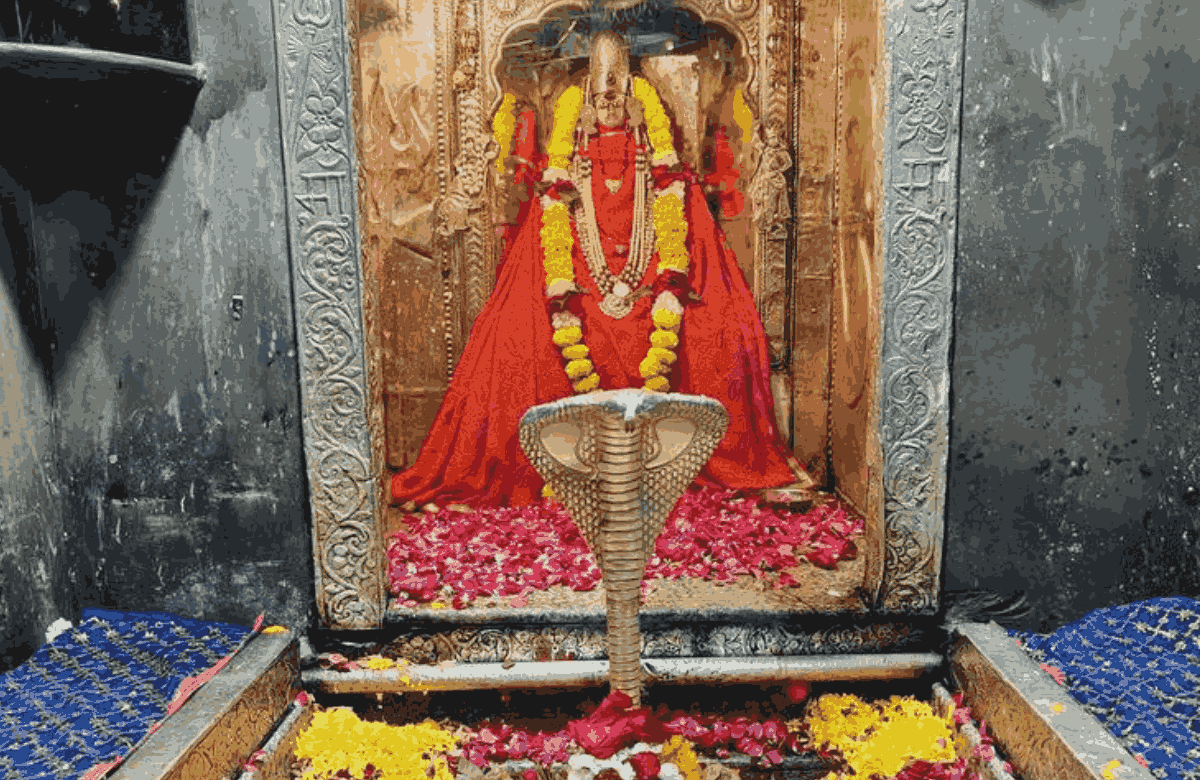
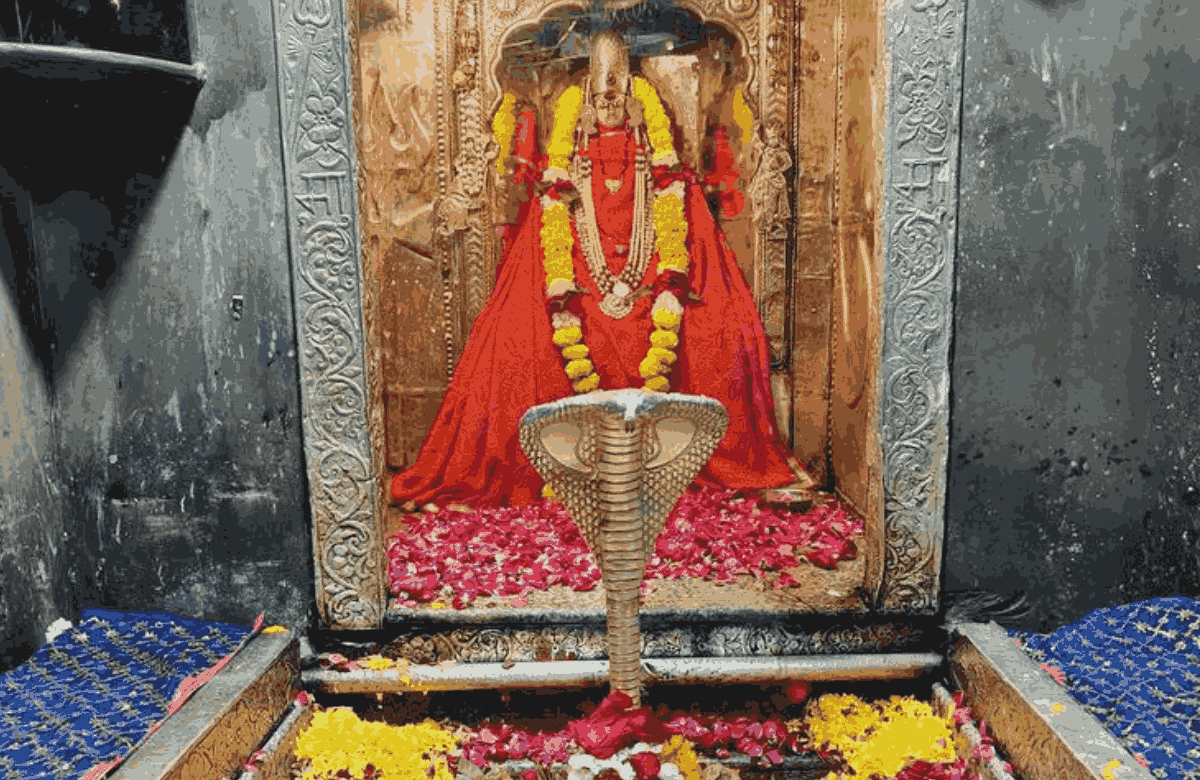
The main Omkareshwar Temple — housing the swayambhu Jyotirlinga — rises across five storeys, each representing a different spiritual plane in Hindu cosmology. The structure follows the North Indian Nagara architectural tradition, with a characteristic curvilinear shikhara (tower) rising above the sanctum. The lower sections of the temple — particularly the sanctum walls and mandapa (assembly hall) pillars — date from the Paramara period (10th–12th century CE). Later additions and surface renovations during the Maratha era (18th century) modified the upper storeys and the entrance facade.
- Sanctum (Garbhagriha): The innermost chamber housing the Omkareshwar Jyotirlinga. The linga is black granite, swayambhu (self-manifested), and is believed to have existed here since time immemorial. The sanctum walls feature Paramara-era stone carvings.
- Antarala (Vestibule): The transitional chamber between the sanctum and the mandapa, featuring carved doorways with elaborate torana (arch) designs characteristic of the Paramara school.
- Mandapa (Assembly Hall): The large pillared hall where devotees gather for aarti and collective prayer. The pillars here show both Paramara-era bases and Maratha-era capitals — the architectural joint of two historical periods visible in a single column.
- Upper Storeys (Floors 2–5): Added or extensively renovated during the Maratha period, these levels house additional shrines to Goddess Parvati, Ganesha, and the Navagraha (nine planets). The 5th storey offers panoramic views of the Narmada and the surrounding Vindhya hills.
The Siddhanath Temple — Paramara Masterpiece
Built in the 11th century CE during the reign of the Paramara kings, the Siddhanath Temple stands apart as a perfectly preserved specimen of Paramara Nagara architecture — specifically the Bhumija sub-style, where the shikhara is divided into a grid of miniature towers (urushringas) that create a richly textured, three-dimensional surface effect. The exterior sculptural programme of the Siddhanath Temple is exceptional in quality and scope. The panels depict: Shiva in his multiple iconographic forms (Nataraja, Bhairava, Ardhanarishvara, Lingodbhava), scenes from the Mahabharata and Ramayana, erotic sculpture in the Khajuraho tradition, celestial musicians (gandharvas), and an encyclopedic range of decorative motifs. Art historians place these sculptures among the finest of the 10th–12th century Deccan-Malwa school.
The Mamleshwar Temple — Pre-Paramara Origins
Located on the mainland south bank opposite Mandhata Island, the Mamleshwar (Amareshwar) Temple is believed to be older than the island temples — possibly pre-dating the Paramara dynasty. Its architectural style is simpler and more austere, reflecting an earlier period of Shaivite temple construction in the region. The linga at Mamleshwar is also considered swayambhu.
The Sacred Mythology of Omkareshwar: Stories That Built the Temple
The mythology of Omkareshwar is not background decoration — it is the foundation upon which the entire pilgrimage tradition is built. Understanding these stories transforms a visit to the temple from sightseeing into a lived spiritual encounter.
Story 1: The Manifestation of Omkareshwar Jyotirlinga
According to the Shiva Purana's Koti Rudra Samhita, the Vindhya mountain once felt inadequate compared to the cosmic mountain Meru. In his grief and longing, the Vindhya performed austerities on the banks of the Narmada — at the very spot that is now Mandhata Island — creating a clay image of Lord Shiva and worshipping it with complete devotion for six months. The gods of heaven were so moved by this penance that they too descended to worship at the same spot. Pleased by the collective devotion of both the Vindhya and the celestial beings, Lord Shiva agreed to remain present at this location permanently — manifesting as the Omkareshwar Jyotirlinga. He then divided himself into two forms: one on the island (Omkareshwar) and one on the mainland (Mamleshwar) — granting both forms equal sanctity.
Story 2: King Mandhata and the Island's Sacred Name
King Mandhata — a legendary monarch of the Ikshvaku (Solar) dynasty mentioned in the Ramayana, Mahabharata, and multiple Puranas — is described as one of the greatest rulers of ancient India. The Vishnu Purana describes him as a chakravartin (universal emperor) whose glory extended across all three worlds. According to the Omkareshwar tradition, King Mandhata chose this island on the Narmada to perform his final tapasya — sitting in meditation without food or water, worshipping the formless Shiva. His penance lasted for so long and was so intense that the gods grew concerned and descended to witness it. Lord Shiva eventually appeared before Mandhata, blessed him with divine vision (darshan), and declared that the island would forever bear the king's name as a tribute to his devotion. From that day, the island has been called Mandhata — and every pilgrim who sets foot on it participates, symbolically, in the king's ancient act of devotion.
Story 3: Adi Shankaracharya at Govindapada Cave
The historical-mythological account of Shankaracharya's arrival at Omkareshwar is one of the most remarkable stories in the history of Indian philosophy. The young Shankara — walking barefoot from Kerala to the Himalayas — arrived at the Narmada bank and asked the river to recede so he could cross to Mandhata Island. According to the hagiographic texts, the river obeyed. On the island, Shankara found the cave of Govinda Bhagavatpada. The sage — who was in deep samadhi — was identified by Shankara through his spiritual perception. Govinda, impressed by the young boy's knowledge and spiritual radiance, accepted him as his disciple. In this cave, Shankara studied directly under Govinda for several years before being sent northward with the instruction to write commentaries that would revive Vedic dharma across India. Everything that Shankaracharya became — every philosophy, every monastery (matha), every text — traces its origin to this cave at Omkareshwar.
Why Omkareshwar Temple History Still Matters Today
The history of Omkareshwar Temple is not merely an academic subject. It is a living presence that every visitor encounters — in the architecture, in the rituals, in the sacred geography of the island itself.
- The Parikrama as Historical Re-enactment: The 4 km barefoot circumambulation of Mandhata Island follows the exact path that ancient pilgrims have walked for over two millennia. Each shrine on the circuit marks a historical or mythological event. Walking the parikrama is walking through the temple's history in real time.
- The Govindapada Cave as a Living Heritage Site: Pilgrims from the Advaita Vedanta tradition — particularly followers of Shankaracharya's four mathas (Sringeri, Dwarka, Puri, Jyotirmath) — consider Govindapada Cave at Omkareshwar one of their most sacred sites. Annual gatherings of scholars and sannyasis at this cave continue the intellectual tradition that Shankaracharya began here in the 8th century.
- The Siddhanath Temple as an Open-Air Museum: The 11th-century Siddhanath Temple is not merely a historical artefact — it is an active place of worship where sculpture created a thousand years ago is still garlanded with fresh flowers daily. This continuity of devotion — unbroken from the Paramara era to the present — is extraordinary by any measure of world heritage.
- The Dam and the Submerged History: The Omkareshwar Dam controversy brought the temple's historical vulnerability sharply into focus. Submerged ghats and shrines — lost beneath the Narmada's elevated water level — serve as a reminder that India's sacred heritage requires active protection. Advocacy groups continue to push for the documentation and preservation of submerged structures.
Final Thoughts: History That Lives and Breathes
The history of Omkareshwar Temple is not stored in a museum. It is not locked behind glass. It lives in every stone of the Siddhanath Temple's carved walls, in the darkness of Govindapada Cave, in the sound of the Narmada flowing around the Om-shaped island, in the early morning bells of the Bhasm Aarti drifting across the water before sunrise. When you visit Omkareshwar knowing its history — the Puranic manifestation of the Jyotirlinga, the medieval Paramara architects who built its stone towers, the philosopher who found his guru in a cave here, the Maratha queens who restored its ghats — the experience becomes something far richer than pilgrimage. It becomes a conversation with two thousand years of unbroken Indian civilisation. Go to Omkareshwar. Take off your shoes. Walk the parikrama. Touch the ancient stone. Stand at the Sangam where the Narmada meets the Kaveri. And let the history of this sacred island speak to you directly.