

- Adi Kailash Blogs
- @Nagarjuna_Travels
Most people who research the Adi Kailash yatra come back with two names they expect to find — Adi Kailash peak itself, and Om Parvat with its sacred snow OM formation. Very few, unless they have already been there, know about Jolingkong Lake — the extraordinary glacial lake that sits at the foot of both these sacred peaks and serves as the beating heart of the entire Adi Kailash pilgrimage landscape. It is the lake that reflects Adi Kailash in its surface on still mornings. It is the lake whose stillness makes pilgrims stop mid-step and simply stand. And it is the lake that, despite being the centrepiece of one of the most sacred valleys in the Indian Himalayas, almost nobody outside the pilgrimage community has heard of. This guide gives you the complete picture of Jolingkong Lake — what it is, where it sits, how to reach it, what the altitude does to the experience, what makes it sacred, and why a visit to Adi Kailash without spending time at Jolingkong Lake is a visit that leaves its most profound chapter unread.
What Is Jolingkong Lake? Understanding the Centrepiece of the Adi Kailash Yatra
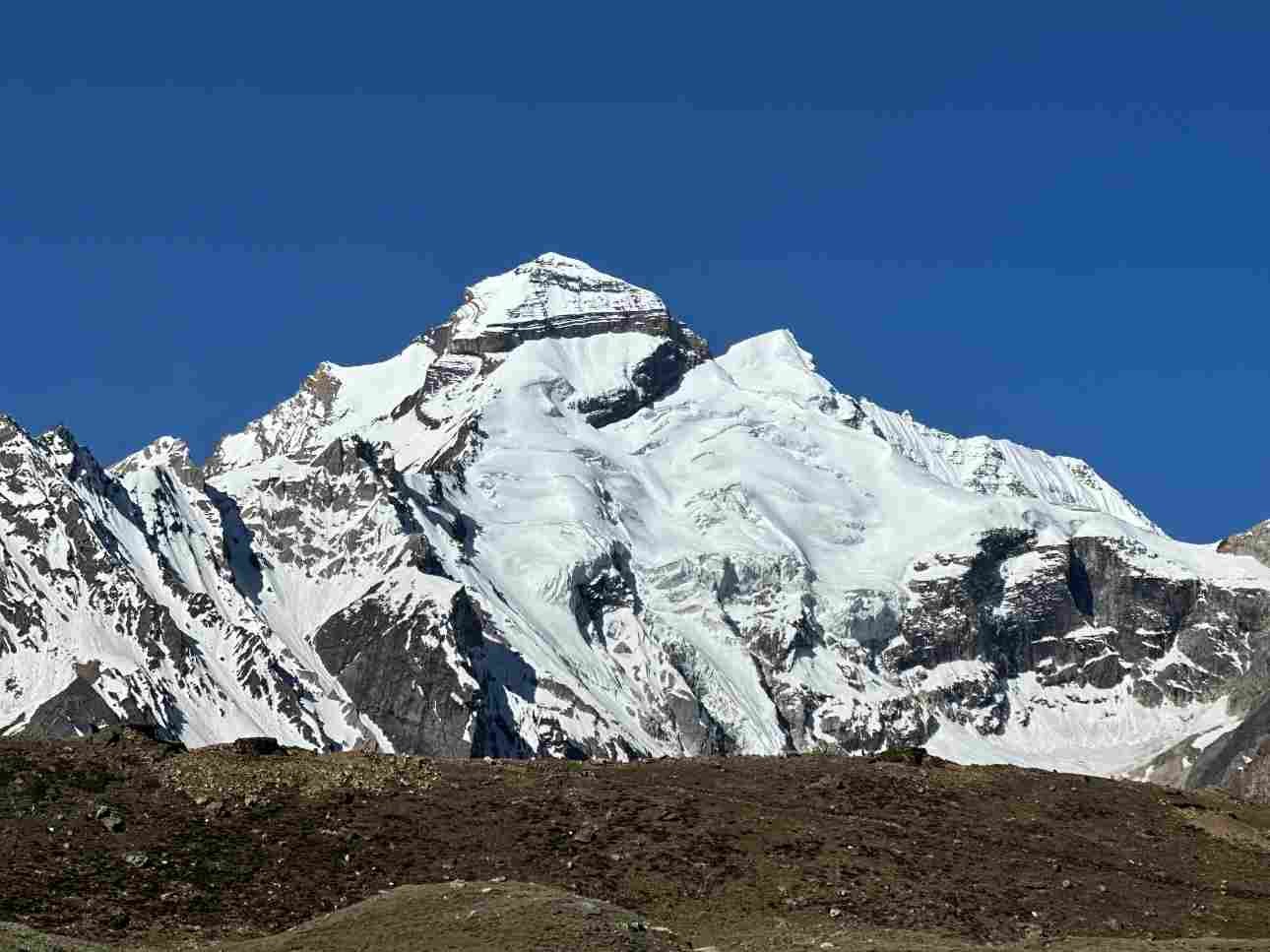
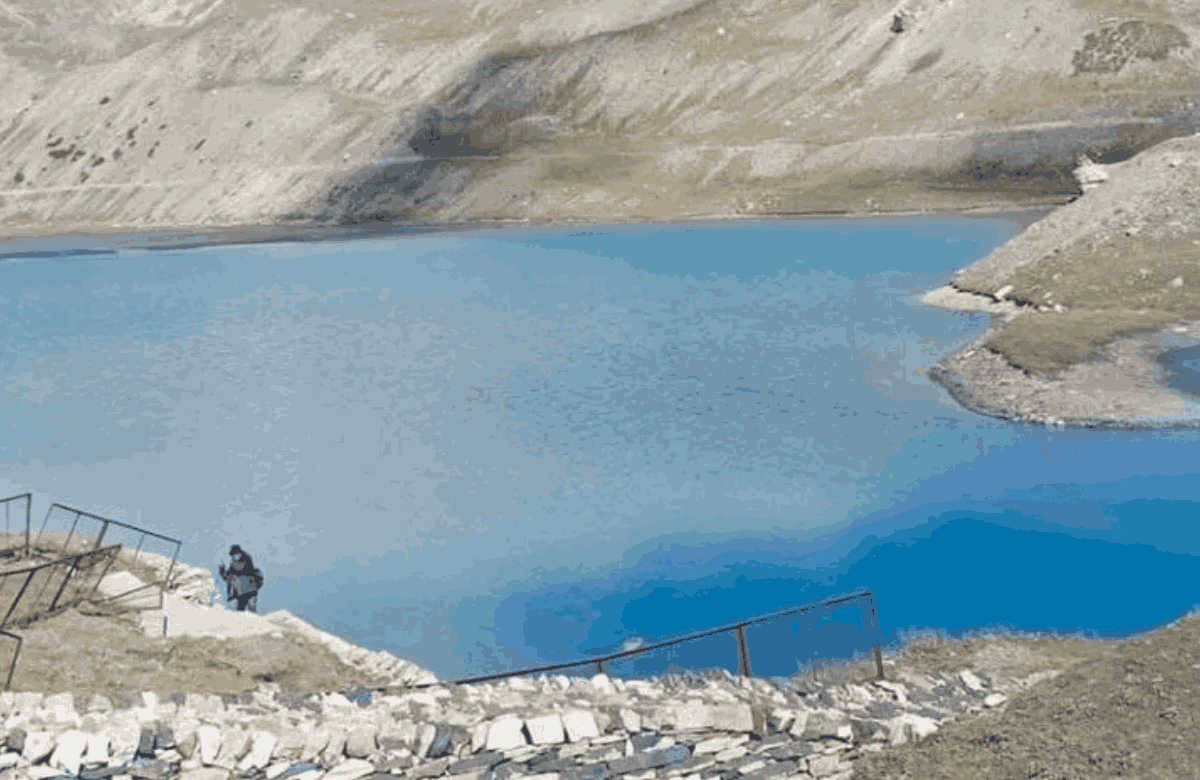
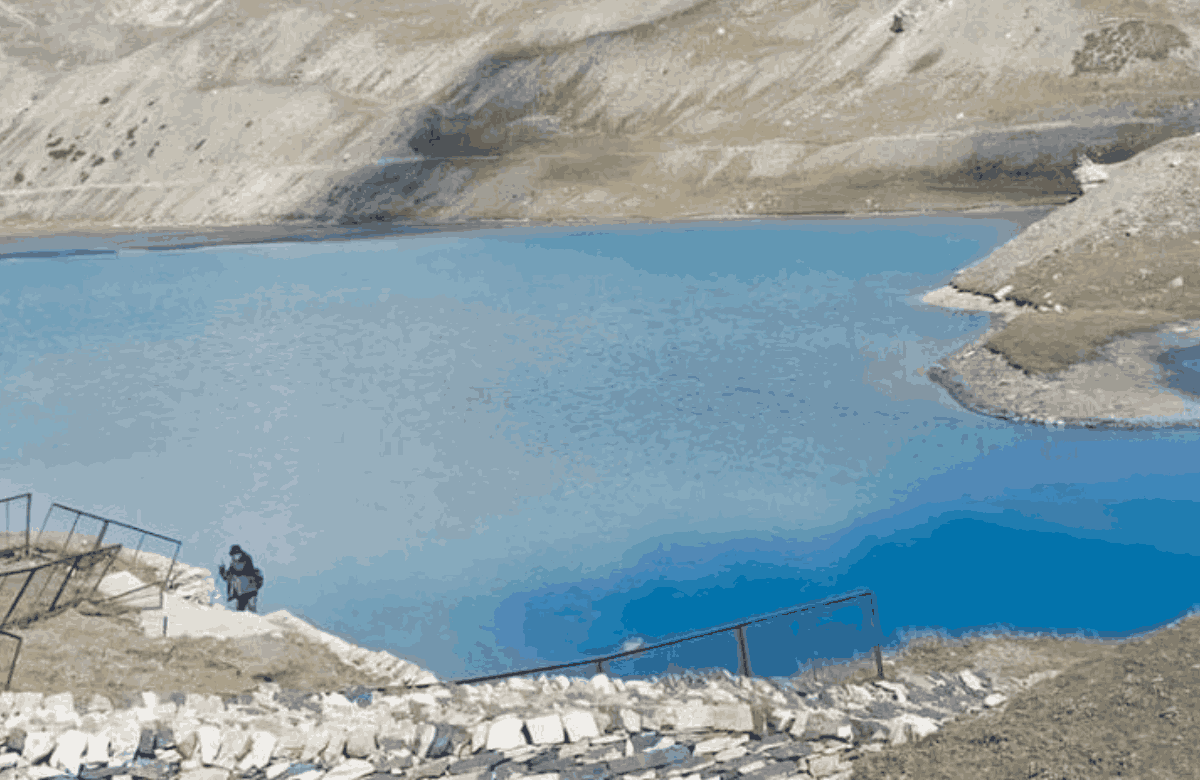
Jolingkong Lake is a natural glacial lake situated in the Vyans Valley — the high-altitude border valley in Pithoragarh district of Uttarakhand that runs along the India-Tibet-Nepal trijunction. The lake sits at approximately 3,680 metres above sea level, within the restricted Inner Line Permit zone that borders Tibet, and is encircled by some of the most dramatic Himalayan scenery in the western Kumaon range. What makes Jolingkong Lake extraordinary is its setting. The lake is positioned at the base of Adi Kailash — the sacred peak that is one of the Panch Kailash, the five sacred Himalayan Kailash peaks revered in Hindu and Shaivite tradition. When conditions are right — calm air, clear sky, the particular stillness of an early morning in the Vyans Valley — Adi Kailash reflects in the lake's surface with a precision that seems almost impossible at this altitude. The reflection of a 5,945 m sacred peak in a high-altitude glacial lake, surrounded by absolute silence except for the occasional wind off the glacier — this is the image that stays with Adi Kailash pilgrims for the rest of their lives. Jolingkong is also the general name given to the area rather than solely the lake — the road-head where vehicles stop, the small cluster of tented accommodation available during the yatra season, and the viewpoint from which both Adi Kailash and Om Parvat are visible. But at its heart, Jolingkong means the lake and the sacred landscape around it.
Parvati Sarovar: The Sacred Name of Jolingkong Lake
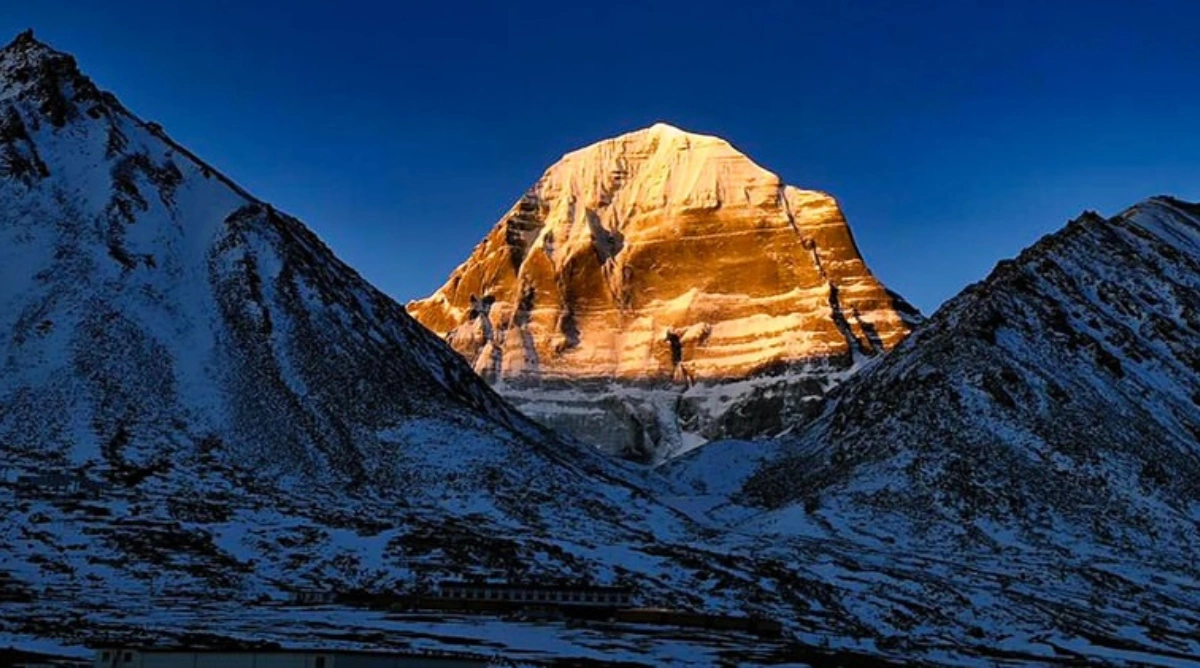
Jolingkong Lake is known by another name in the pilgrimage tradition — Parvati Sarovar. This name carries the entire spiritual weight of the lake's significance. Just as Lake Mansarovar (the sacred lake in Tibet at the foot of Mount Kailash) is associated with Goddess Parvati and Lord Shiva's divine abode, Parvati Sarovar at Jolingkong mirrors this relationship in the Indian Himalayan context. The parallel is deeply intentional. Adi Kailash — the peak above the lake — is understood in local Shaivite tradition as the earthly abode of Lord Shiva, the Indian counterpart to Mount Kailash in Tibet. And the lake at its base is understood as Parvati Sarovar — the sacred lake where Goddess Parvati's presence is felt, corresponding to Lake Mansarovar in Tibet. For pilgrims who cannot make the full Kailash Mansarovar journey to Tibet, the Adi Kailash and Parvati Sarovar experience is considered a spiritually equivalent alternative — Lord Shiva's home and Parvati's lake, both accessible without crossing an international border. The name Parvati Sarovar appears in local oral traditions and in some written accounts of the Adi Kailash pilgrimage, though Jolingkong remains the more commonly used geographic name in travel literature and on maps. When pilgrims and guides refer to either name in the context of this valley, they mean the same sacred lake at the foot of the same sacred peak.
Jolingkong Lake Altitude: What the Height Means for Your Visit
The Jolingkong Lake altitude of approximately 3,680 metres above sea level places it firmly in the high-altitude category — above the 3,500 m threshold where altitude effects become meaningfully noticeable for most visitors. Understanding what this means in practice helps pilgrims prepare both physically and logistically for their visit. At 3,680 m, the air at Jolingkong Lake contains approximately 65% of the oxygen available at sea level. For most healthy adults, this is enough to walk, rest, and move at a gentle pace without dramatic discomfort — but it is definitely enough to make exertion feel harder than expected, to cause mild headaches if you ascend too quickly, and to reduce your sleep quality during overnight stays near the lake. These effects are manageable with proper acclimatisation, but they should not be dismissed.
The Altitude Journey to Jolingkong
The journey from the lower valley to Jolingkong Lake involves a significant altitude gain that makes acclimatisation planning essential. From Dharchula at approximately 930 m, you drive and climb through Gunji (3,200 m) and Nabi before reaching the Jolingkong road-head at around 3,680 m. This gain of over 2,700 m over the course of the journey means the body needs staged adjustment time rather than a single rushed ascent. Most well-designed Adi Kailash packages include at least one overnight halt at Gunji (3,200 m) specifically to allow this adjustment before the final push to Jolingkong.
- Dharchula (930 m): last town before the restricted zone — do not rush from here to Jolingkong in a single day
- Gunji (3,200 m): the key acclimatisation halt — spend at least one night here before Jolingkong
- Nabi village (~3,400 m): the last village on the route, a short stretch before Jolingkong
- Jolingkong Lake (~3,680 m): the destination — arrive by mid-morning to maximise your time at the lake in the clearest part of the day
- Adi Kailash peak (5,945 m): visible above the lake — you are not climbing this, but viewing it from the lake
- Om Parvat (6,191 m): also visible from the Jolingkong area — the OM formation appears on its face
What You See at Jolingkong Lake: The Complete Landscape
Standing at Jolingkong Lake, the landscape opens around you in a way that is genuinely unusual even by Himalayan standards — a convergence of sacred peaks, glacial water, and open high-altitude sky that creates something more than the sum of its parts.
Adi Kailash Above the Lake
Adi Kailash (5,945 m) rises directly above the northern shore of Jolingkong Lake — its dark rock face and characteristic pyramid-like shape dominating the skyline from every point around the lake. The peak's resemblance to Mount Kailash in Tibet is unmistakable once you have seen both, and local tradition identifies this as intentional — Adi Kailash is understood as the earthly mirror of the sacred Tibetan peak. In the morning hours, when the sun first strikes the south face of Adi Kailash and the lake surface is still, the reflected peak appears in the water with a clarity that makes the experience feel almost surreal.
Om Parvat in the Same View
One of the most remarkable things about the Jolingkong Lake viewpoint is that both Adi Kailash and Om Parvat are visible in the same general visual field — though Om Parvat typically requires moving to a slightly different viewpoint above the lake rather than from the lake shore itself. Om Parvat (6,191 m) is the peak on whose face a natural configuration of snow traces the sacred OM (■) symbol — one of the most extraordinary natural formations in the Himalayas. The combination of seeing Adi Kailash reflected in Parvati Sarovar and then turning to see Om Parvat's sacred symbol on the adjacent ridge is the visual and spiritual climax of the entire Adi Kailash yatra for most pilgrims.
The Lake Itself: Colour, Character, and Stillness
Jolingkong Lake is not a large lake — it is a glacial tarn, approximately 300 to 400 metres across in its longer dimension, fed by glacial melt and high-altitude snowfields. Its water has the deep blue-green quality characteristic of glacial lakes at this altitude — a colour that appears almost artificially vivid against the surrounding grey-brown rock and the white of the snowfields above. The water temperature is near-freezing even in June and July, though pilgrims do bathe here as an act of devotion, treating it as they would a sacred river or spring. The silence at Jolingkong Lake is one of its most striking qualities. At 3,680 m, in a valley that sees very few vehicles and very few pilgrims compared to major pilgrimage sites, the quiet is not the absence of sound so much as its own presence. Wind off the glacier, the occasional call of a high-altitude bird, the sound of feet on rock — these sounds arrive with unusual clarity in the still air. Many pilgrims describe sitting at the lake's edge and feeling a quality of attention, of presence, that they struggle to find anywhere else.
The Spiritual Significance of Jolingkong Lake in Hindu and Local Tradition
Jolingkong Lake — or Parvati Sarovar as it is known in devotional tradition — carries a layered spiritual significance that goes beyond its visual drama. Understanding this significance deepens the experience of visiting the lake and explains why pilgrims who come for the peak leave having been most moved by the lake at its feet.
The Mansarovar Mirror: Sacred Geography in the Indian Himalayas
In Hindu sacred geography, certain relationships between sacred mountains and sacred lakes are considered expressions of divine pairing — Shiva and Parvati, the masculine and feminine divine principles, manifest as mountain and water respectively. The most revered of these pairings is Mount Kailash and Lake Mansarovar in Tibet — the supreme Shiva and the lake of Parvati's presence. Jolingkong Lake and Adi Kailash recreate this sacred pairing in Indian territory. Parvati Sarovar is the Indian Mansarovar — smaller in physical scale but understood in local tradition as equal in spiritual potency. For pilgrims who complete the Adi Kailash yatra, the time spent at Jolingkong Lake carries the same emotional weight as the time spent on the shores of Mansarovar for those who complete the full Kailash Mansarovar yatra. The lake is where the pilgrimage becomes interior — where the external journey of reaching the Vyans Valley translates into an internal encounter with something that cannot easily be named.
Bathing in Parvati Sarovar: The Sacred Ritual
Bathing in Jolingkong Lake — Parvati Sarovar — is considered an act of profound purification in local Shaivite tradition. The water is understood as sacred in the same way that Mansarovar's water is sacred in the Kailash tradition — touched by the divine presence of the mountain above it and by the accumulated prayers of pilgrims who have sat at its shores across centuries. Pilgrims who bathe here typically do so with the same reverence they would bring to the Ganga or to any other sacred body of water — dipping three times, offering prayers, and carrying some water home. The near-freezing temperature of the water is part of the devotional act. Just as bathing in Mansarovar's cold waters or the Ganga at Gangotri's glacier source demands physical commitment from the devotee, bathing in Parvati Sarovar at Jolingkong is an offering of the body's comfort to the sacred. Most pilgrims who do it describe the combination of cold water, thin air at 3,680 m, and the presence of Adi Kailash above them as an experience that cuts through every layer of ordinary consciousness.
How to Reach Jolingkong Lake: The Complete Route
Reaching Jolingkong Lake requires navigating the same route as the Adi Kailash yatra — there is no separate shortcut or alternate path. The lake is the destination at the end of the Adi Kailash road and short trek, making the journey to it identical to the journey to the Adi Kailash darshan viewpoint.
Stage 1: Getting to Pithoragarh
Pithoragarh is the gateway town for the entire Adi Kailash and Jolingkong Lake journey. From Delhi, the road distance to Pithoragarh is approximately 580 to 600 km, typically split across two days. The nearest airport is Pantnagar (approximately 210 km from Pithoragarh), and the nearest major railhead is Kathgodam (approximately 210 km). From Pithoragarh, the restricted zone begins and all further travel requires the Inner Line Permit.
Stage 2: Pithoragarh to Dharchula
From Pithoragarh, the road to Dharchula covers approximately 95 km, taking 3 to 4 hours through scenic Kumaon hill terrain along the Kali River. Dharchula, at approximately 930 m, is the last town with full hotel facilities, ATMs, and medical infrastructure before the high-altitude section begins. Inner Line Permits are coordinated through your operator from Dharchula.
Stage 3: Dharchula to Gunji
The drive from Dharchula to Gunji covers approximately 80 km along the Kali River valley, climbing steadily to Gunji at 3,200 m. This section takes 4 to 5 hours on the BRO mountain road. Gunji is the critical acclimatisation halt — spending one night here before continuing to Jolingkong is strongly advised and is standard in all well-designed Adi Kailash packages.
Stage 4: Gunji to Jolingkong Lake
From Gunji, the road continues through Nabi village to the Jolingkong road-head, a distance of approximately 50 to 55 km taking 2.5 to 3.5 hours by vehicle. From the road-head, Jolingkong Lake and the Adi Kailash darshan viewpoint are reached by a short walk of 1 to 3 km depending on the exact road terminus in the current season. The walk from the road-head to the lake is relatively flat and manageable at altitude for most pilgrims.
Jolingkong Lake Route: Distance and Time Reference
Stage-by-stage distance reference from all key starting points to Jolingkong Lake.
| From | To | Distance | Approx. Time |
| Delhi | Pithoragarh | ~580–600 km | 2 days (with halt) |
| Pithoragarh | Dharchula | ~95 km | 3–4 hrs |
| Dharchula | Gunji (acclimatisation halt) | ~80 km | 4–5 hrs |
| Gunj | Jolingkong road-head | ~50–55 km | 2.5–3.5 hrs |
| Jolingkong road-head | Jolingkong Lake (walk) | ~1–3 km | 30 min – 1 hr |
| Total: Delhi | Jolingkong Lake | ~810–840 km | 5–6 days (full journey) |
| Total: Pithoragarh | Jolingkong Lake | ~225–245 km | 2 days (with Gunji halt) |
| Total: Dharchula | Jolingkong Lake | ~130–145 km | 2 days (with Gunji halt) |
Best Time to Visit Jolingkong Lake
The timing of a Jolingkong Lake visit shapes the entire experience — not just in terms of accessibility, but in terms of what you actually see when you arrive. The lake's most extraordinary feature is the reflection of Adi Kailash in its surface, and this requires both calm conditions and clear skies — two things that are far more reliably available at certain times of year than others.
May to June: Pre-Monsoon Clarity
May and June offer the most reliable combination of accessibility and clear skies. The winter snowpack is melting, the valley roads are fully open after spring clearing, and the lake itself is at its fullest and most reflective. Morning conditions in May and June at Jolingkong are frequently still and clear — ideal for the Adi Kailash reflection experience. June can bring occasional afternoon cloud build-up, but mornings at the lake are generally excellent. This is peak season, and accommodation at Gunji and the Jolingkong area should be booked well in advance.
September to October: Post-Monsoon Perfection
September and early October are widely considered the finest window for Jolingkong Lake by experienced pilgrims and guides. The monsoon has washed the Himalayan atmosphere clean, the Om Parvat OM formation is at its most sharply defined against the refreshed snowfields, the lake has been replenished by monsoon precipitation, and the September morning light on the lake surface and on Adi Kailash's south face creates a visual quality that most yatris describe as unlike anything they have seen before. Crowds are lower than in May–June, and the post-monsoon autumn character of the landscape — the vivid green valley floor, the cobalt blue sky, the first hints of snow on the higher ridges — adds a dimension to the Jolingkong experience that the pre-monsoon season cannot match.
July and August: Avoid If Possible
The Southwest Monsoon hits the Kumaon Himalayas in July and August with cloud banks that frequently obscure Adi Kailash and Om Parvat for days at a time. Reaching the lake is possible — the road remains open in most years except for brief landslide interruptions — but the odds of a clear darshan of the sacred peaks from Jolingkong Lake are significantly lower than in the pre- or post-monsoon windows. The lake landscape is intensely green and dramatically beautiful in the monsoon, but if your primary goal is the Adi Kailash reflection and the Om Parvat view, July and August carry real risk of disappointment.
Conclusion
Jolingkong Lake is the soul of the Adi Kailash yatra in a way that the peak itself — magnificent as it is — cannot quite be, because the lake is where you stand still. Every approach to a sacred mountain eventually becomes about what you find when you stop moving — and at Jolingkong, what you find is a glacial lake reflecting a 5,945 m peak in near-silence at 3,680 m, with Om Parvat's sacred OM symbol visible on the adjacent ridge, and the absolute quality of the Himalayan sky above. It is called the hidden gem near Adi Kailash not because it is hard to reach — it is right there at the end of the road — but because its significance tends to be overlooked in the planning phase, when most attention goes to the peak and the Om formation. Visit Jolingkong Lake with the time and attention it deserves. Sit at its edge. Watch the morning light come to Adi Kailash. Let the stillness do what Himalayan stillness does. And you will understand why pilgrims who come for a peak find themselves most moved by a lake.